School Organizational Structure
Historical Development
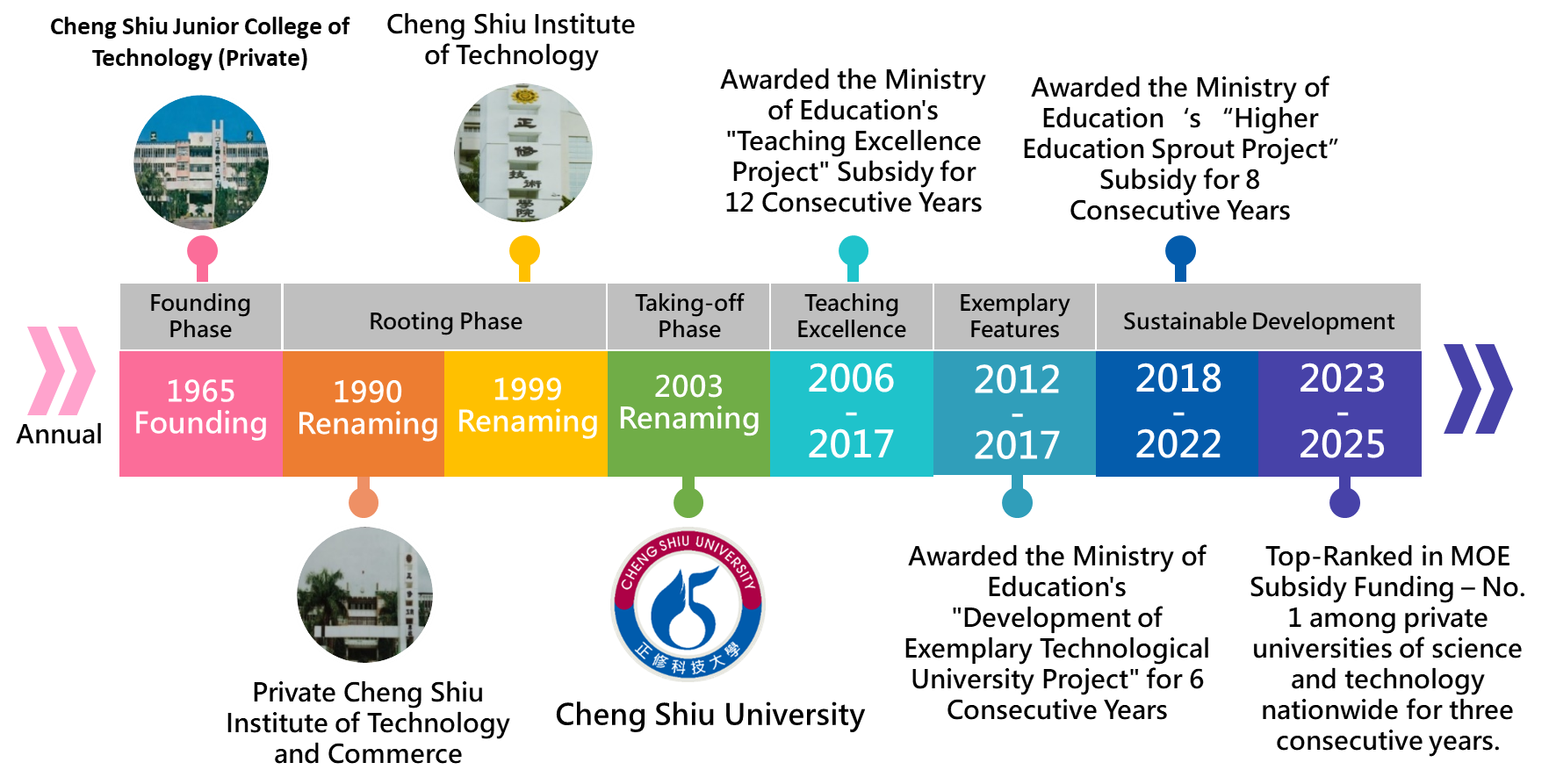
Founded in 1965 on the shores of Chengcing Lake in Kaohsiung, Cheng Shiu University takes its name from the principles of "self-rectification" and "self-cultivation" in The Great Learning, with the motto "Striving for Excellence."
The University was upgraded to Cheng Shiu University of Science and Technology in 2003 and officially renamed Cheng Shiu University in 2016.
Guided by the philosophy of "Practical Innovation, Pursuit of Excellence," the University is positioned as an industry-oriented teaching university that integrates innovation with practical education.
It is committed to cultivating professionals with expertise, ethical values, social responsibility, and a global perspective while strengthening industry-academia collaboration to provide high-quality teaching and learning.
In recent years, Cheng Shiu University has further emphasized the integration of theory and practice and technology integration, enhancing students' practical competencies, advancing applied research, and fostering close collaboration with industry to support innovation and sustainable development.
Basic Information of the University
|
School Name |
Cheng Shiu University |
|
Industry |
Education Services - Higher Education |
|
Location |
Taiwan (No. 840, Chengqing Road, Niaosong District, Kaohsiung City) |
|
President |
President: Mr. Kung Rui-Chang |
|
Campus Area |
School ground : 9.75 hectares; |
|
Number of students |
14,623 |
|
Number of fulltime teachers |
371 |
|
Number of parttime teachers |
663 |
|
Number of administrative staff |
382 |
|
Number of colleges |
3 colleges (College of Engineering, College of Health and Management, and College of Life and Creativity) |
|
Number of departments and graduate schools |
22 departments, 1Graduate Institute,14 graduate schools,1Doctoral Program |
Organizational System
Cheng Shiu University is a private university governed by a Board of Trustees and led by the President with five Vice Presidents. The University offers doctoral, master's, in-service master's, four-year undergraduate, two-year undergraduate, five-year junior college, and continuing education programs. It comprises three colleges: the College of Engineering, the College of Health and Management, and the College of Creative Living. During the reporting period, there were no significant changes to the University's upstream or downstream entities or activities.
|
Administrative Units |
Administrative Units |
Office of Academic Affairs, Office of Student Affairs, Office of General Affairs, Office of Research and Development, Office of International Affairs, Office of Library and Information, Secretariat, Audit Office, Personnel Office, Accounting Office, Office of Admissions, Office of Technology and Arts Development, Office of Public Relations |
|
3 Centers |
Center for Institutional Research, Center for CSU History, Center for Industry-Academia R&D ( |
|
|
Academic unit |
Academic unit |
Department of Civil Engineering and Geomatics (including the Master's Program in Construction Engineering), Department of Mechanical Engineering (including the Master's Program in Mechatronic Engineering), Department of Electronic Engineering (including the Master's Program), Department of Electrical Engineering (including the Master's Program), Department of Industrial Engineering and Management (including the Master's Program), Department of Architecture and Interior Design, Department of Computer Science and Information Engineering (including the Master's Program), Department of E-Sports Technology, Graduate Institute of Environmental Toxicology and Emerging Contaminants. |
|
College of Health and Management |
Department of International Business, Department of Business Administration (including the Master's Program in Business Management), Department of Finance (including the Master's Program), Department of Information Management (including the Master's Program), Department of Early Childhood Care and Education (including the Master's Program), Department of Long-Term Care and Health Management, Department of Nursing. |
|
|
College of Life and Creativity |
Department of Cosmetics and Fashion Styling (including the Master's Program), Department of Applied Foreign Languages, Department of Leisure and Sport Management (including the Master's Program), Department of Tourism and Recreation, Department of Digital Multimedia Design, Department of Visual Communication Design (including the Master's Program in Cultural and Creative Design and Art Conservation), Department of Food and Beverage Management. |
|
|
2 Centers |
Center for General Education, Center for Teacher Education |
|
|
Various committees and subsidiary bodies |
Various Committees (Faculty Evaluation Committee, Faculty Appeals Review Committee, Student Appeals Review Committee, Gender Equality Education Committee, Information Security Management Committee, Special Education Promotion Committee, etc.), Affiliated Kindergarten |
|
Geographical Location and Student Demographics
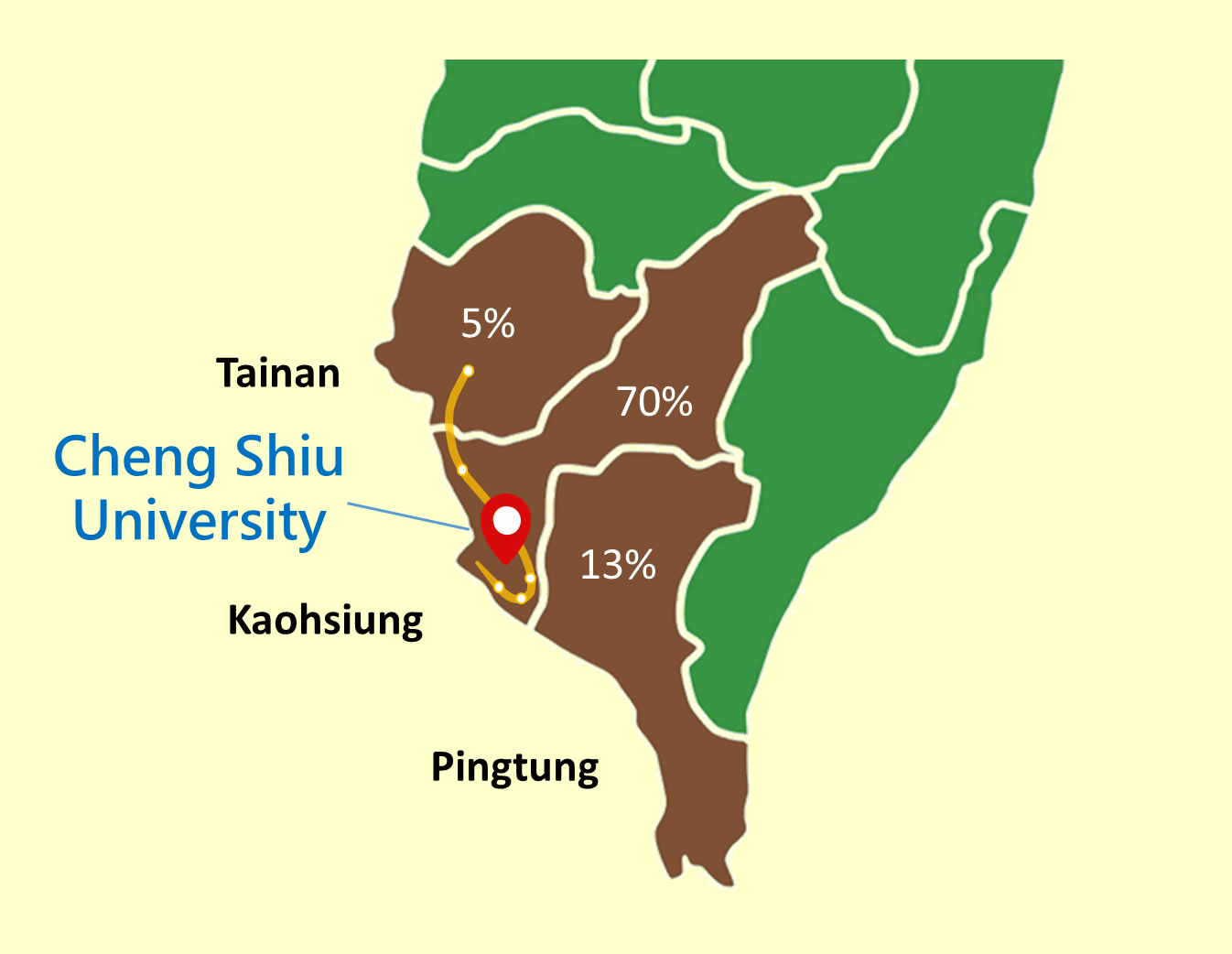
Located in the heart of Kaohsiung and within Southern Taiwan's S Technology Corridor, Cheng Shiu University is surrounded by key industrial clusters, providing abundant resources for industry-academia collaboration and net-zero development. The University adopts a high-rise campus design to maximize land-use efficiency and support sustainable campus development.
In the 2025 academic year, the University enrolled 14,623 students, the largest student population among Taiwan's private universities of science and technology. More than 85% of students are from Kaohsiung, Pingtung, and Tainan, reflecting its strong regional influence in southern Taiwan.
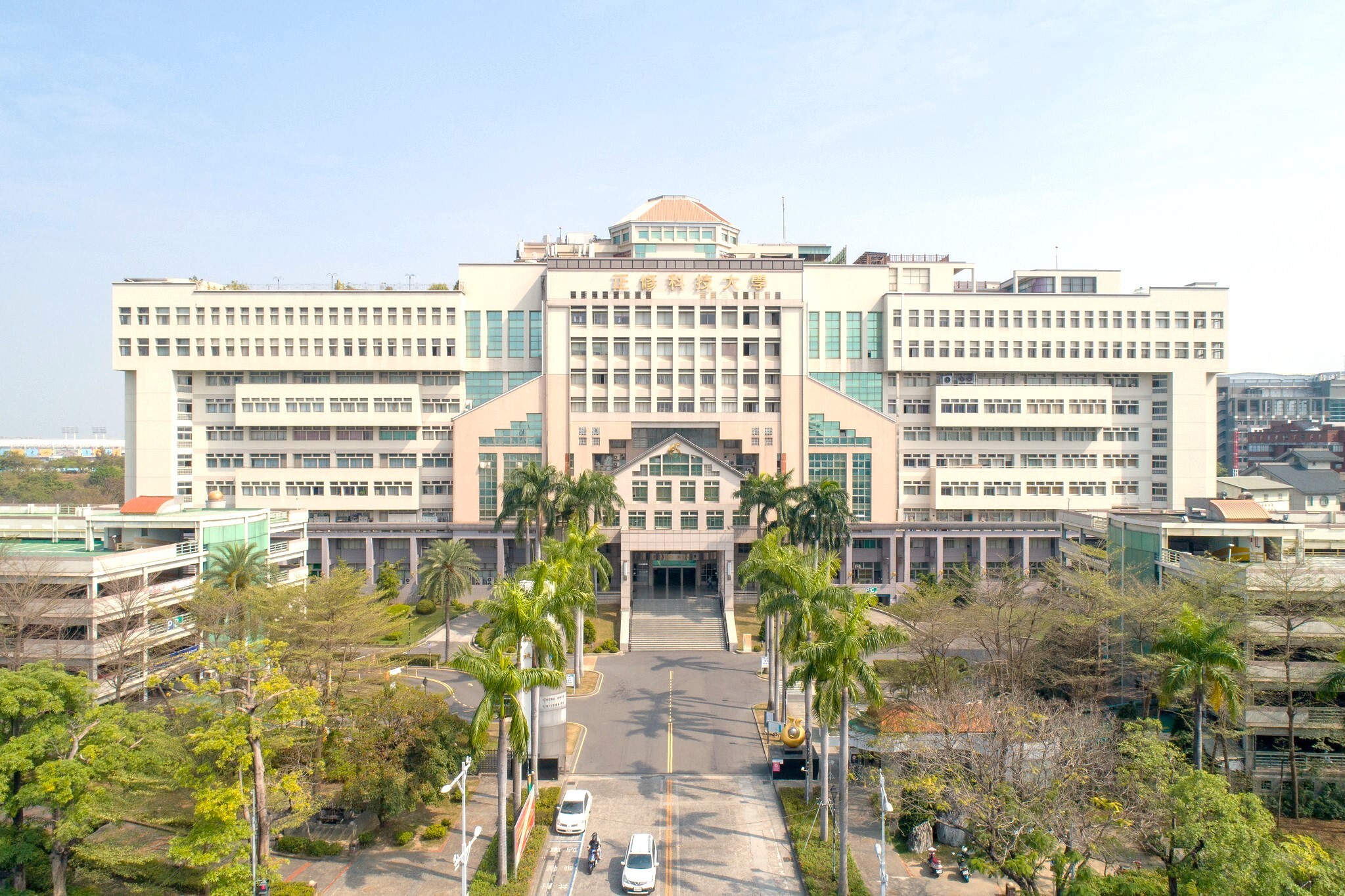
Aerial Photo of The Campus and Surrounding Environment

Board Composition
Cheng Shiu University is a private university governed by a Board of Directors. Board nominations, conflicts of interest, and remuneration are governed by the Articles of Endowment of Cheng Shiu School Foundation. the Board comprises 16 members, including the Chairperson.
The Chairperson is elected by the directors. One supervisor is nominated by a Board-appointed nomination committee and elected by the Board. the roster of directors is submitted to the Ministry of Education for approval. Board member profiles, the Articles of Endowment, financial information, and Board meeting minutes are publicly disclosed on the University website under “Private School Board Information.”
Board remuneration does not include bonuses, severance payments, clawback mechanisms, or retirement benefits. Details of remuneration and expenses paid to directors and the supervisor are disclosed in the Board Financial Information section.
As the Board does not directly exercise administrative authority, no Board performance evaluation mechanism has been established.
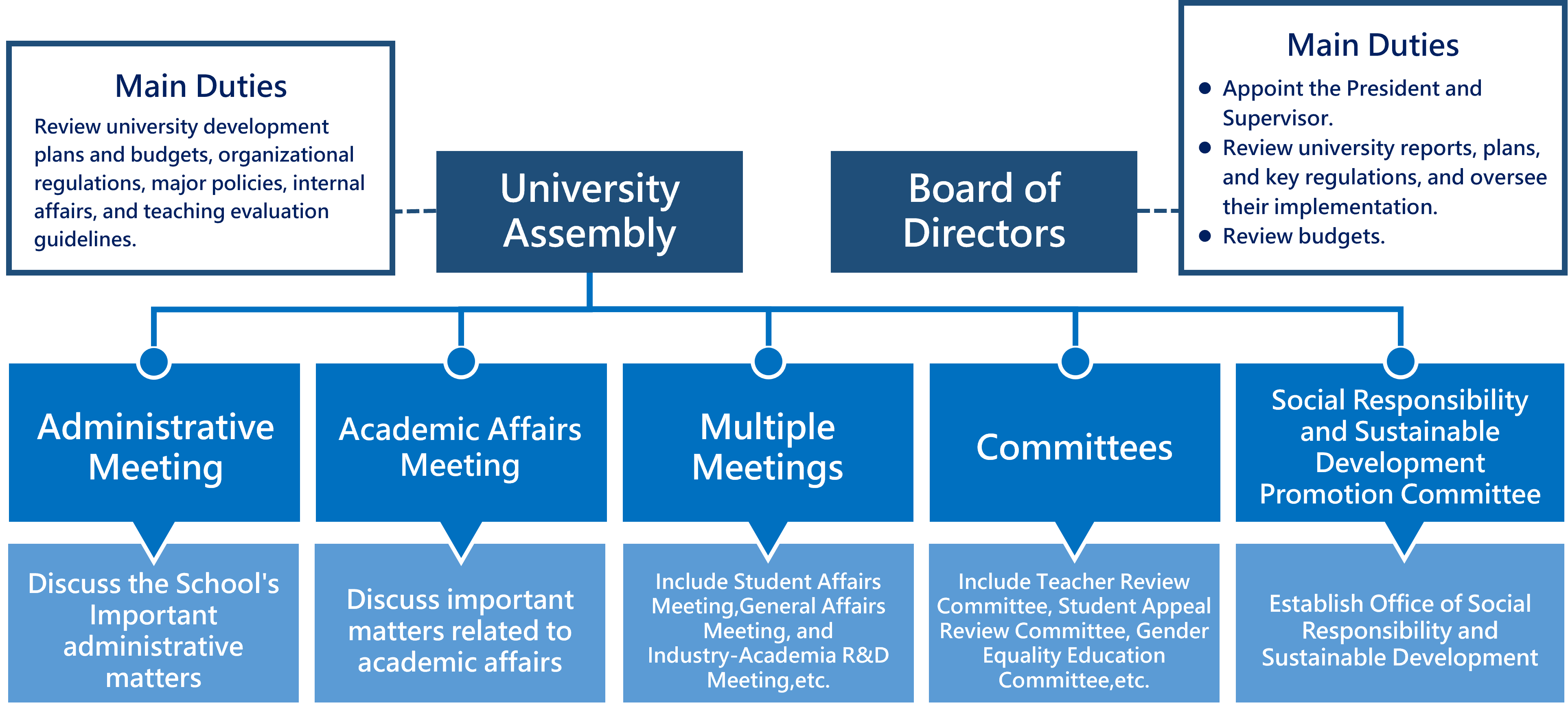
The Board generally meets at least twice per semester. Its key responsibilities include appointing the President, reviewing university affairs and development plans, overseeing major regulations, and approving budgets and final accounts.
University Council
In accordance with Article 15 of the University Act and the University’s Organizational Regulations, the University Council serves as the University’s primary decision-making body, reviewing major matters such as institutional development plans and budgets. Committees and task forces are established as needed.
Chaired by the President, the Council comprises vice presidents, academic and administrative executives, and representatives of faculty, staff, researchers, students, and other relevant groups. Representatives serve one-year renewable terms, with selection and composition governed by the Organizational Regulations of Cheng Shiu University.
◎ AY 2024 University Council Composition
|
Member representation |
President |
Vice presidents |
Deans |
Dean of academic affairs |
Dean of student affairs |
Faculty representatives |
Staff representatives |
Student representatives |
Total |
|
Male |
1 |
3 |
2 |
1 |
0 |
9 |
1 |
2 |
19 |
|
Female |
0 |
0 |
1 |
0 |
1 |
6 |
1 |
1 |
10 |
|
Total |
1 |
3 |
3 |
1 |
1 |
15 |
2 |
3 |
29 |
The University Council is convened and chaired by the President and meets at least once per semester. It reviews major matters including institutional development plans, budgets, organizational regulations, establishment or restructuring of academic units, and other key university affairs. Meeting minutes are publicly available in the University and Financial Information Disclosure section. in AY2024, four University Council meetings were held, addressing university governance, regulatory compliance, finance and internal controls, talent development, student rights, industry–academia research, and campus safety, supporting sustainable development, teaching quality, and stakeholder interests.
Committees
To strengthen university governance, the University has established the Administrative Council and various functional committees to coordinate and advance university affairs. Each committee operates under established regulations, meets regularly, and follows up on resolutions through formal review and oversight mechanisms. for matters involving student rights and interests, student representatives participate in relevant discussions in accordance with the University’s Regulations Governing the Selection of Student Representatives for University Meetings.
|
Dimension |
Committees |
|
Governance |
Budget; Admissions; Social Responsibility and Sustainable Development; Curriculum Development; Information Security Management; Academic Ethics Review; Faculty Evaluation; Student Rewards and Disciplinary Actions; Off-Campus Student Internships; Student Guidance |
|
Environmental |
Environmental Safety and Health; Health and Food Services; Traffic Safety |
|
Social |
Industry–Academia Program Curriculum Planning; Faculty Grievance Review; Staff Grievance Review; Gender Equity Education; Student Grievance Review; Special Education; Character Education Promotion |
Social Responsibility and Sustainable Development Steering Committee
The University established the Social Responsibility and Sustainable Development Steering Committee, chaired by the President and composed of senior administrators and academic leaders. The Committee oversees and identifies sustainability-related impacts and opportunities, formulates sustainability goals—including SDG indicators—and sets strategic directions. Functional working groups are formed to address climate change, energy conservation, carbon reduction, and the development of social practice teams.
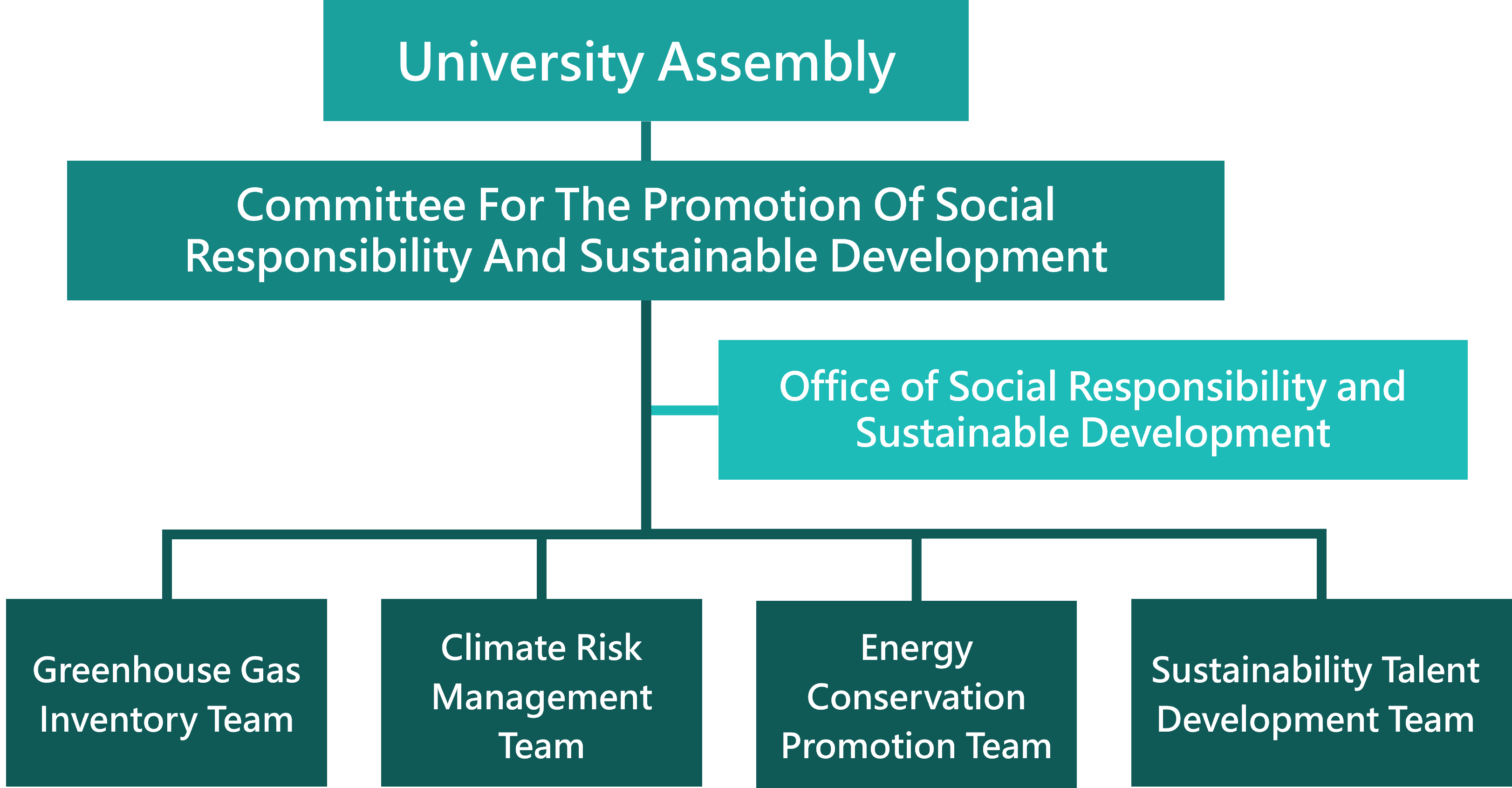
Committee responsibilities:
-
Identify sustainability-related impacts and opportunities.
-
Oversee sustainability impact management in institutional governance.
-
Formulate sustainability goals and strategic directions.
-
Promote the implementation of university social responsibility (usr) initiatives.
|
|
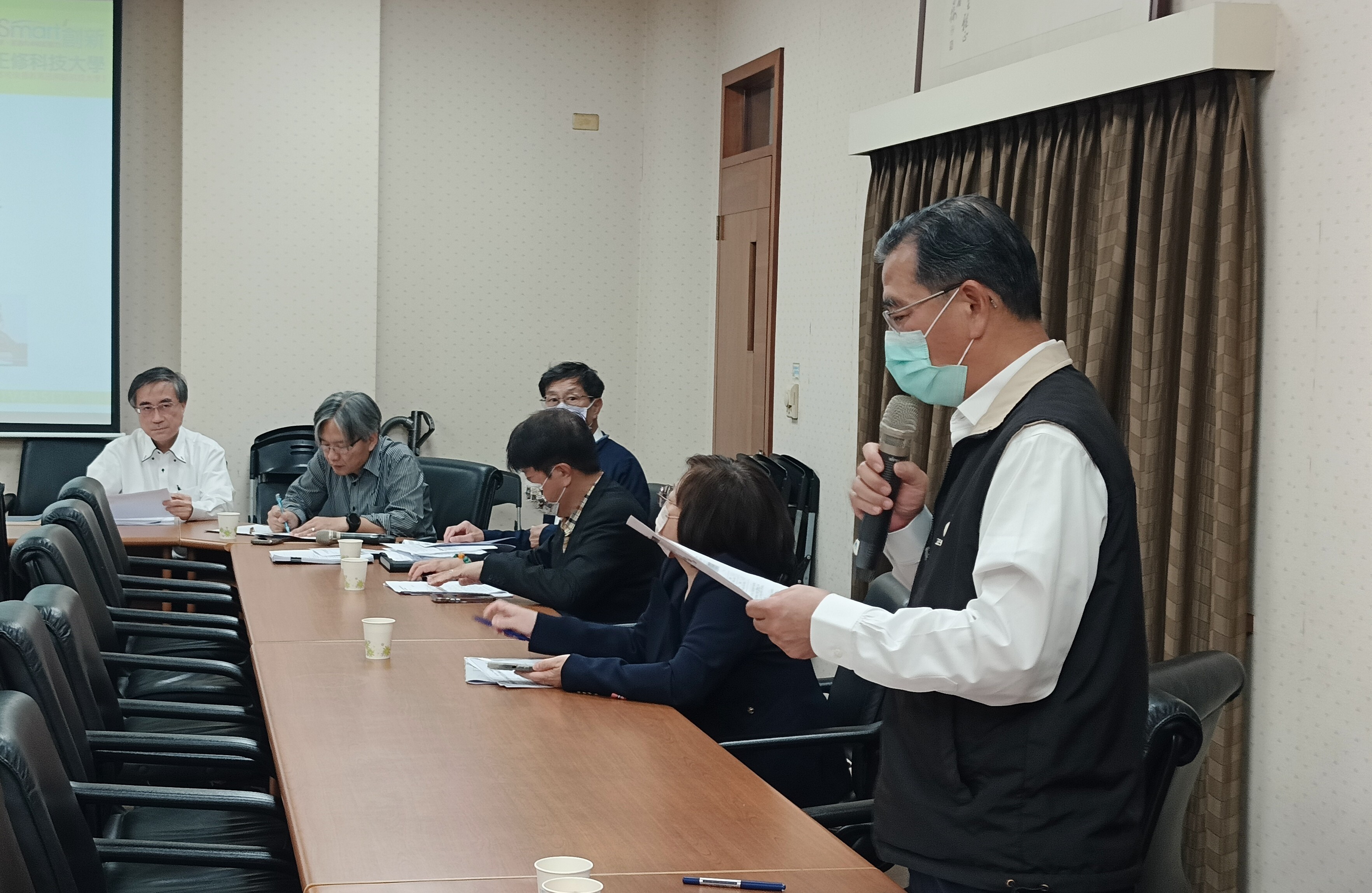
Office of Social Responsibility and Sustainable Development
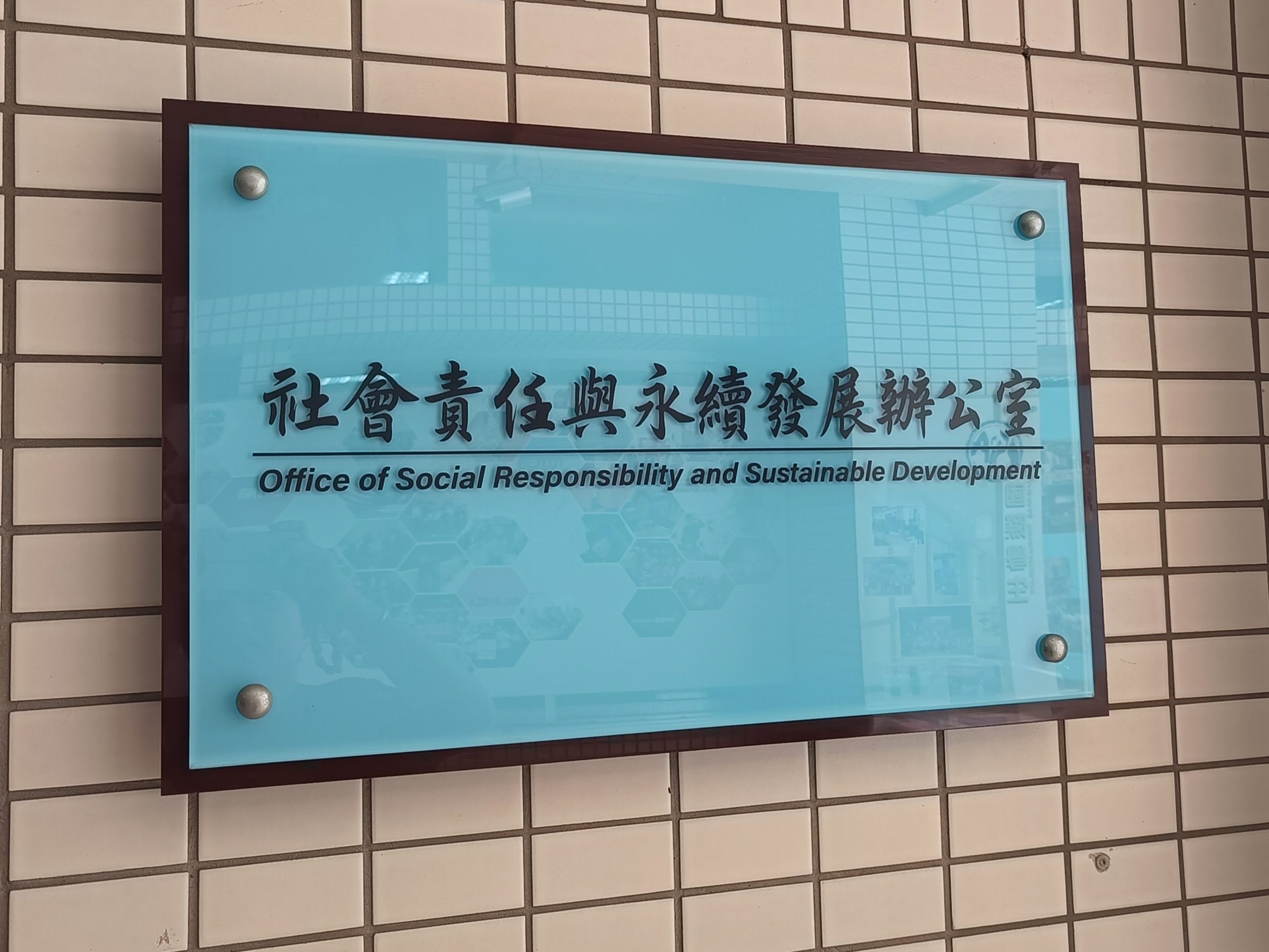
The University Social Responsibility Office was established in 2021 and renamed the Office of Social Responsibility and Sustainable Development in 2022 to integrate university-wide sustainability and social responsibility initiatives. Headed by a Vice President, the Office has five staff members, including an Executive Director, section heads, and administrative personnel.
It coordinates project resources, provides consultation on innovative course implementation, audits medium- and long-term institutional goals, consolidates results, and regularly reports progress to the Steering Committee.
Office responsibilities:
-
Coordinate meetings on social responsibility and sustainable development.
-
Organize sustainability events and showcase achievements.
-
Compile sustainability performance and prepare the sustainability report.
-
Manage the cheng shiu university sustainability website.
|
|
Participation in Associations, External Organizations, and Initiatives
In 2022, Cheng Shiu University signed the University Sustainability Initiative with the Taiwan Institute for Sustainable Energy (TAISE), promoting sustainability and net-zero education while cultivating ESG professionals.
In 2025, the University joined the Net-Zero Carbon Strategy Alliance with the Kaohsiung City Government's Net Zero Academy and became a member of the Ministry of Environment's Net-Zero Green Talent Alliance to foster green talent through industry-government-academia collaboration.
Marking its 60th anniversary, the University continued its Dream Fulfillment Social Service Program in partnership with the Huashan Social Welfare Foundation, establishing an interdisciplinary service alliance to create greater social impact. It also joined six local schools in signing the Wunshan Special District Co-Prosperity Agreement, strengthening collaboration between schools and the local community to advance sustainable regional development.
Participation in Associations, External Organizations, and Initiatives
|
University Governance (G) |
Environmental Sustainability (E) |
Social Inclusion (S) |
|
Association of Private Universities and Colleges of Technology, R.O.C. Association of Private Education Institutions, R.O.C. Association of Private School Educators, R.O.C. Taiwan Association for Institutional Research (TAIR) Chinese Institute of Engineers Taiwan Assessment and Evaluation Association Southern Taiwan Regional Research Ethics Consortium Information Service Association of Chinese Colleges (ISAC)
Southern Taiwan University of Science and Technology Alliance Pension Fund Management Committee for Faculty and Staff of Private Schools, R.O.C. |
Taiwan Green University Alliance(GUUT) Taiwan Association of Environmental Analysis Laboratories Taiwan Soil and Groundwater Environmental Protection Association Kaohsiung City Government Environmental Protection Bureau Net Zero Academy – Net-Zero Carbon Strategy Alliance Ministry of Environment – Net-Zero Green Talent Development Alliance |
National Intercollegiate Athletic Games Association, R.O.C. Association of University and College Arts Centers, R.O.C. World Chinese Language Association International Industry-Academia Collaboration and Education Alliance United Nations Educational, Scientific and Cultural Organization (UNESCO) International Council on Monuments and Sites (ICOMOS) General Education Association, R.O.C. Taiwan General Education Alliance & Quality Improvement Association Kaohsiung Cultural Studies Society Taiwan Academic E-Book and Database Alliance CONCERT (Consortium on Core Electronic Resources in Taiwan) Library Interchange Association, R.O.C. Kaohsiung Counseling Psychologists Association Kaohsiung Association of Social Workers Taiwan Association for Continuing Higher Education |
Note: Items are organized by esg category and listed alphabetically within each category.