Risk Management and Internal Audit/Control
Institutional Risk Management
Global competition, declining birth rates, and rapid industrial change pose challenges to university development, teaching, and learning. Drawing on institutional research, the University conducts SWOT analysis across its operating environment, resources, stakeholders, and societal needs to guide strategic planning and achieve its institutional vision and goals.
SWOT Analysis
Strengths• Comprehensive academic programs support interdisciplinary learning and vertical progression to meet diverse industry needs. • Nationally leading certification facilities strengthen students’ professional qualifications and practical skills. • Faculty bring extensive industry experience, driving strong performance in industry–academia collaboration, continuing education, and technology transfer. • Campus counseling and student support services have received national recognition. • The University’s prime Kaohsiung location offers convenient transportation and strong access to urban resources and partnerships. • As the only private university of science and technology with two internationally recognized research centers, the University also operates a government-funded five-axis machining talent development base. • The University advances 3i empowerment and smart education while maintaining sound financial governance and strong evaluation performance.
|
|
Weaknesses
•Declining foundational skills among incoming students hinder progression to professional coursework. •Weak motivation and limited goal-setting reduce learning engagement. •High rates of part-time employment affect academic performance. •Limited foreign-language proficiency and global awareness restrict international mobility. •An aging faculty creates workforce sustainability challenges.
|
Opportunities
•Growth in AI, smart manufacturing, and digital transformation is increasing demand for interdisciplinary talent. •Global net-zero policies are expanding career opportunities in green energy, environmental management, and ESG. •Government initiatives support digital innovation, lifelong care, the New Southbound Policy, and international student recruitment. •Kaohsiung’s science and industrial parks are driving strong demand for technical talent. •The planned MRT Yellow Line station near campus will improve accessibility and student recruitment. •Local revitalization, cultural heritage, and tourism initiatives create new opportunities for interdisciplinary industry–academia collaboration.
|
Threats•Declining birth rates intensify enrollment competition and closure risks for private universities of science and technology. •Preference for public universities disadvantages private technical and vocational institutions. •Fewer secondary schools and limited cross-regional mobility constrain enrollment in southern Taiwan. •Limited global recognition hinders international partnerships and talent recruitment. •Rapid technological change increases curriculum, faculty development, and equipment costs.
|
In 2025, the University advanced teaching and research in response to declining birth rates, higher education competition, smart transformation, and net-zero trends. Guided by eight institutional strategies, three program development directions, and five industry–academia research strengths, it pursued phased goals, strengthened institutional distinctiveness, and fulfilled its local social responsibility. the SWOT cross-analysis is presented below:
|
SO Strategy: Strengthen Talent Development and Industry Partnerships (Leverage Strengths to Seize Opportunities) |
|
Leverage the University’s diverse programs, industry-experienced faculty, certification facilities, and industry partnerships to address trends in AI, smart manufacturing, digital transformation, and net-zero development. Aligned with Kaohsiung’s industrial clusters, the University cultivates interdisciplinary talent and strengthens applied research. Action Plans: Align curricula with industry needs through AI, interdisciplinary programs, and hands-on learning. Enhance professional certification, skills competitions, industry collaboration, and applied research. Expand international recruitment, student support, and bilingual learning. Develop smart learning facilities, digital resources, and a sustainable campus. |
|
ST Strategy: Strengthen Brand Competitiveness and Student Recruitment (Leverage Strengths to Mitigate Threats) |
|
Leverage the University’s diverse programs, strong performance, practice-oriented learning environment, and specialized research centers to address demographic decline and intensifying competition, strengthen its brand, and attract high-quality students. Action Plans: Advance industry-oriented, collaborative, EMI, and digital learning. Strengthen certification, skills competitions, industry programs, and career readiness. Diversify recruitment through sports education and student support. Showcase institutional achievements and enhance digital recruitment marketing. |
|
WO Strategy: Strengthen Foundational Skills and Global Perspectives (Leverage Opportunities to Address Weaknesses) |
|
Leverage opportunities in AI, digital innovation, the New Southbound Policy, and international exchange to strengthen students’ foundational skills, motivation, global competence, and faculty development. Action Plans: Develop foundational skills and digital literacy through transition support, interdisciplinary curricula, and AI learning. Enhance academic, financial, psychological, and campus safety support. Expand overseas study, internships, and language learning. Strengthen faculty development, interdisciplinary communities, and digital teaching. |
|
WT Strategy: Strengthen Institutional Foundations and Appeal (Minimize Internal Weaknesses and External Threats) |
|
To address demographic decline, intensifying competition, and challenges facing technical and vocational education, the University strengthens institutional foundations and appeal through enhanced student support, employability, internationalization, faculty development, and governance. Action Plans: Strengthen academic support and self-directed learning. Enhance career guidance, job matching, and employability. Develop English proficiency and global perspectives through overseas and cross-border learning. Advance faculty development, teaching quality, and curriculum innovation. Apply institutional research to optimize recruitment, program development, and resource allocation. |
Risk Management Process and Operations
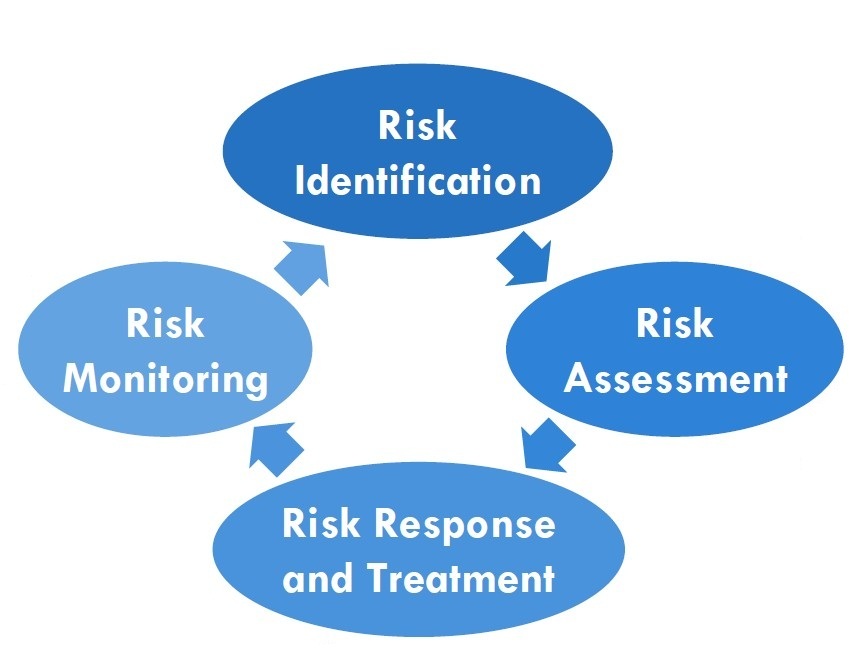
To address risks arising from trends in education policy, social competitiveness, and internationalization, the university follows the Ministry of Education’s Risk Management Implementation Guidelines, integrating risk management into daily operations and decision-making. When setting institutional development goals and strategies, potential risks affecting goal achievement are identified and assessed, with internal control mechanisms applied to reasonably ensure the attainment of these goals.
Internal Control and Audit
The University’s Internal Control System, approved by the Board of Trustees, safeguards operational efficiency, assets, and financial reporting. It covers personnel, finance, board and supervisor operations, control points, and audit procedures.
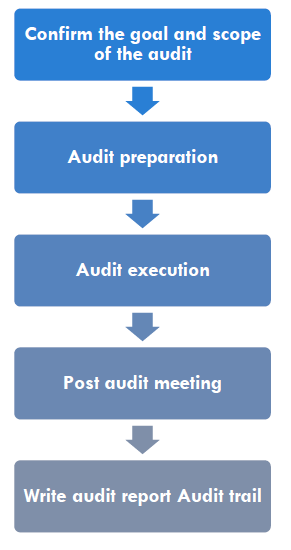
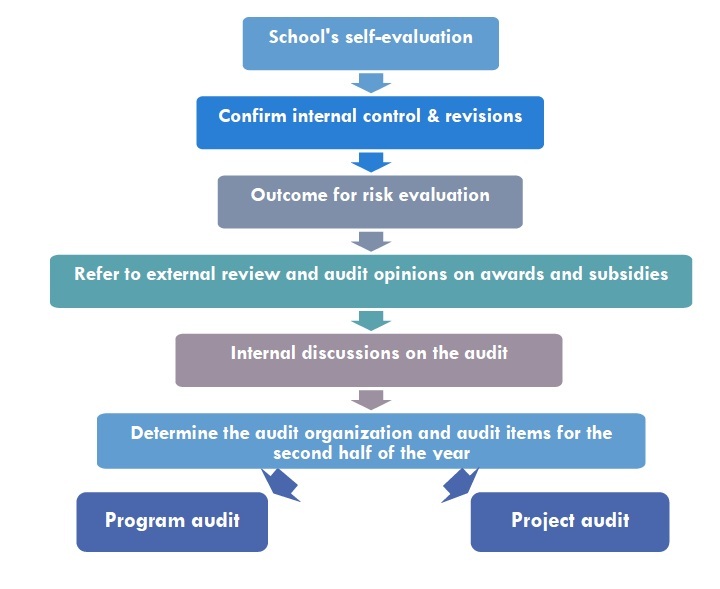
The Audit Office develops annual and special audit plans based on risk assessments, control updates, implementation priorities, and audit experience.
The 2025 Internal Audit Report, published in 2026, reviewed 82 applicable items, all of which were compliant, with no nonconformities.
◎ Integrating Sustainability Reporting into Internal Controls
The University aligns sustainability reporting with domestic and international standards. Responsible units manage and verify relevant data to ensure accurate, complete, and consistent disclosure, strengthen transparency, and progressively align with global sustainability reporting standards.
Annual Audit Planning Process
Internal Audit Execution Flowchart
◎ Institutional Feedback and Reporting Mechanism
Faculty, staff, and students may submit feedback through the University’s confidential system, while the Student Association provides an additional channel for student concerns.
Submissions are anonymously forwarded to designated personnel and must be answered within seven days. the Secretariat regularly monitors and follows up on overdue cases. in the 2024 academic year, 203 submissions were received, mainly concerning systems and facilities, courses and teaching, and other matters. No major whistleblowing cases were reported.
Statistics on the Number of School Affairs Suggestions
|
Academic year |
Systems |
Tuition Fees |
Campus Safety |
Attitude |
Grades |
Courses |
Other |
Total |
|
2024 |
139 |
2 |
2 |
6 |
9 |
21 |
24 |
203 |
Statistics on Institutional Feedback by Category, AY 2024