Waste Disposal and Recovery
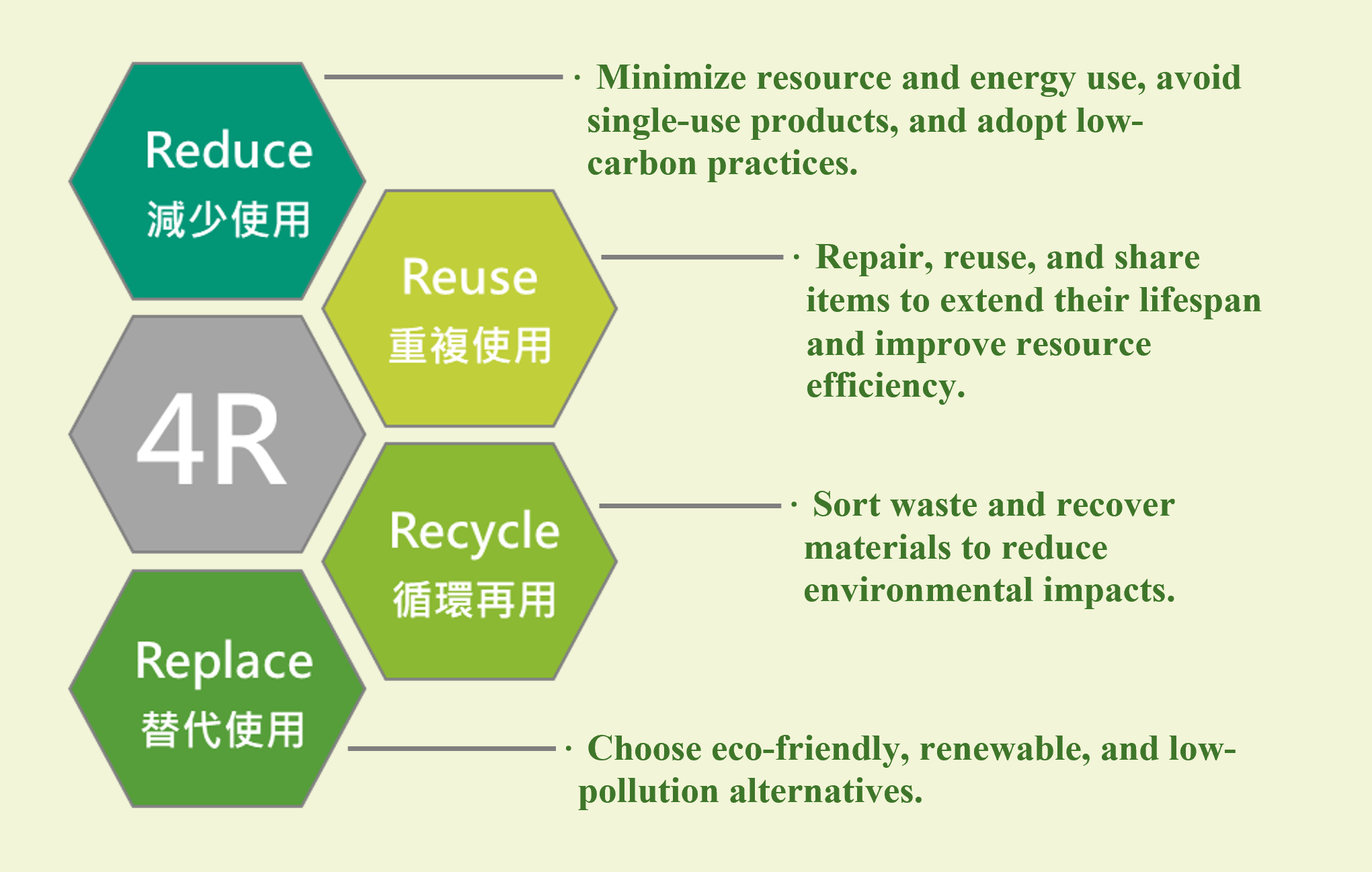
Environmental 4R Principles
To reduce environmental impacts and use resources sustainably, CSU encourages faculty, staff, and students to apply the 4R principles in campus operations and daily life.
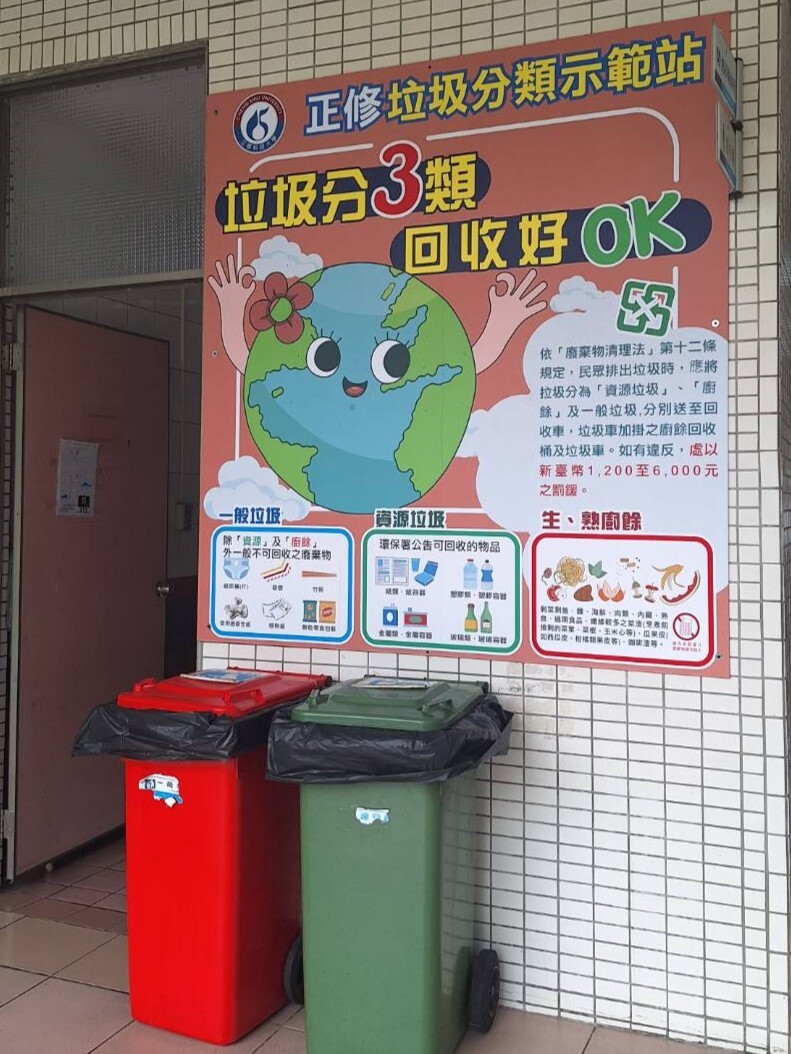
Campus waste is classified as general or hazardous industrial waste. CSU operates 12 sorting and recycling stations, with general waste and recyclables collected daily by a licensed contractor for proper processing. Waste reduction and sorting campaigns also encourage source reduction across the campus community.
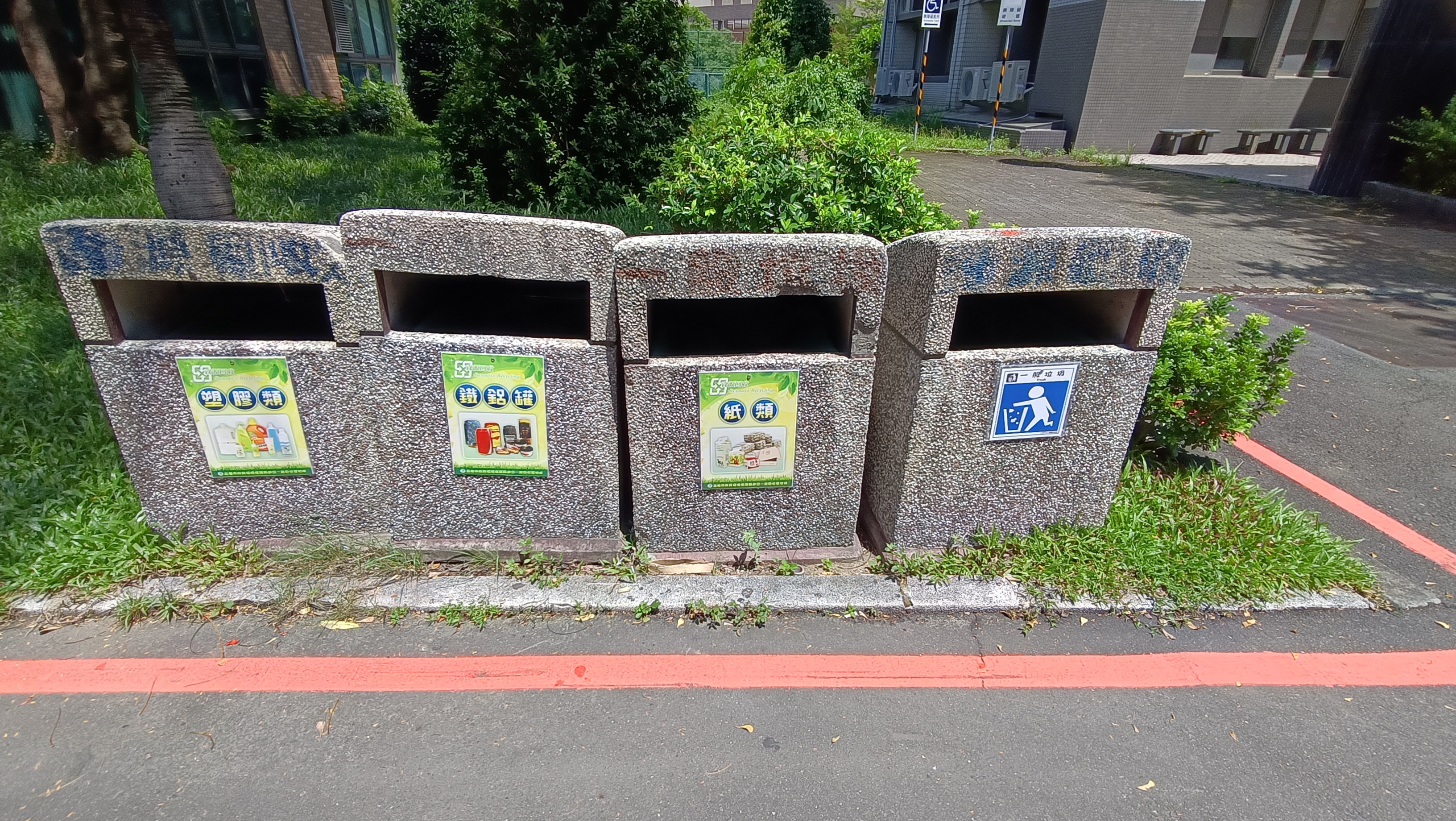
▲ Twelve Waste-Sorting and Recycling Stations
Waste Management
In 2025, CSU generated 315.96 tonnes of general industrial waste, with waste data tracked through standardized records. Hazardous waste—including laboratory liquids, chemicals, empty containers, medical waste, and other laboratory waste—was handled by licensed facilities. National Cheng Kung University processed laboratory liquids, chemicals, and containers, while certified contractors managed medical and other laboratory waste, totaling 45.186 tonnes.
In 2025, CSU generated 361.146 tonnes of waste, down 36.524 tonnes (9.18%) year-on-year. Compared with the 2020 baseline, cumulative waste reduction reached 43.85%, demonstrating progress in sustainable waste management.
Total Waste Reduction
|
Waste Category |
Waste Type |
Total Waste (Metric Tons) |
||
|
2023 |
2024 |
2025 |
||
|
General Industrial Waste |
General Waste |
400.7 |
354.86 |
315.96 |
|
Hazardous Industrial Waste |
Laboratory Waste Liquid |
16.92 |
20.93 |
22.538 |
|
Laboratory Waste Chemicals and Empty Bottles |
3.65 |
5.54 |
5.18 |
|
|
Medical Waste |
1.79 |
3.15 |
2.958 |
|
|
Laboratory Industrial Waste |
16.06 |
13.19 |
14.51 |
|
|
Total Hazardous Industrial Waste |
38.42 |
42.81 |
45.186 |
|
|
Total |
477.54 |
397.67 |
361.146 |
|
|
Waste Reduction Rate (%) |
6.05 |
16.73% |
9.18% |
|
◎ Waste Reduction Measures
CSU combines institutional measures with behavioral change to foster a low-carbon, sustainable campus.
|
Initiative |
Implementation |
|
Green Office Practices |
Encourage reusable cups and containers at meetings and events to reduce plastic bottles and disposable cups. |
|
Paperless Administration |
The electronic document approval system introduced in September 2022 saves an estimated 140,000 sheets of paper annually. |
|
Reusable Tableware |
Campus food vendors are prohibited from using disposable and melamine tableware and must provide washable alternatives. |
|
Second-Hand Reuse |
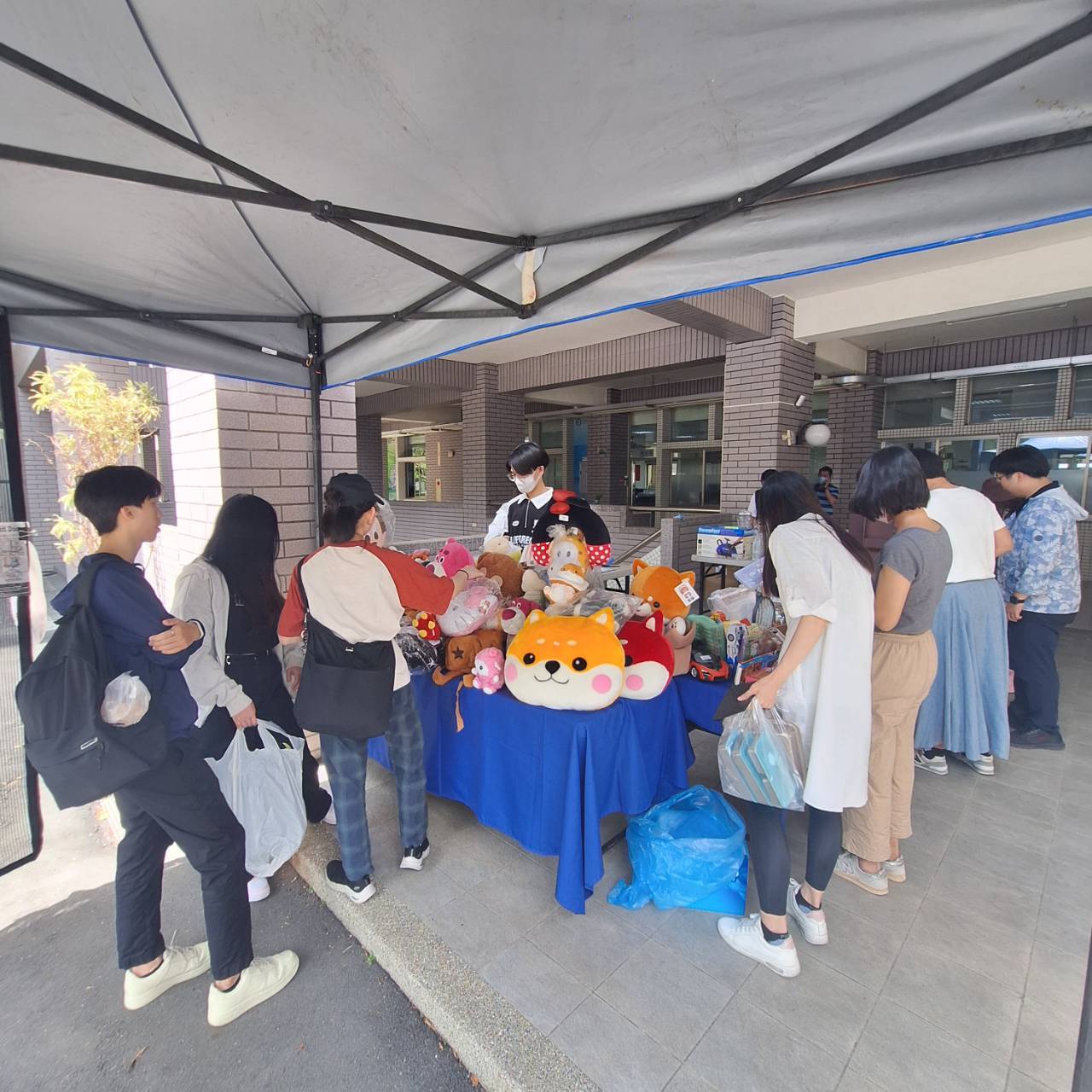
Hold at least two annual charity sales of usable donated items to extend product life and promote circularity. |
|
Food Waste Recycling |
Require food waste sorting and licensed recycling while promoting appropriate portions and reduced leftovers. |
|
▲ Second-Hand Charity Sale |
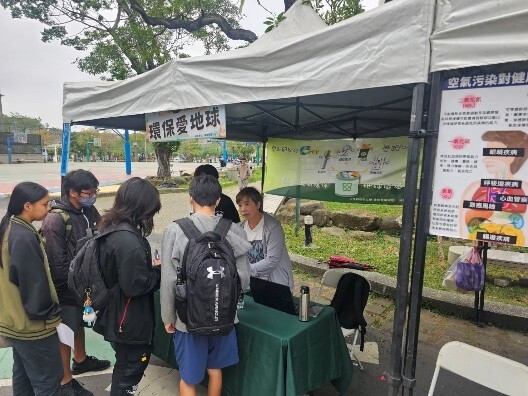
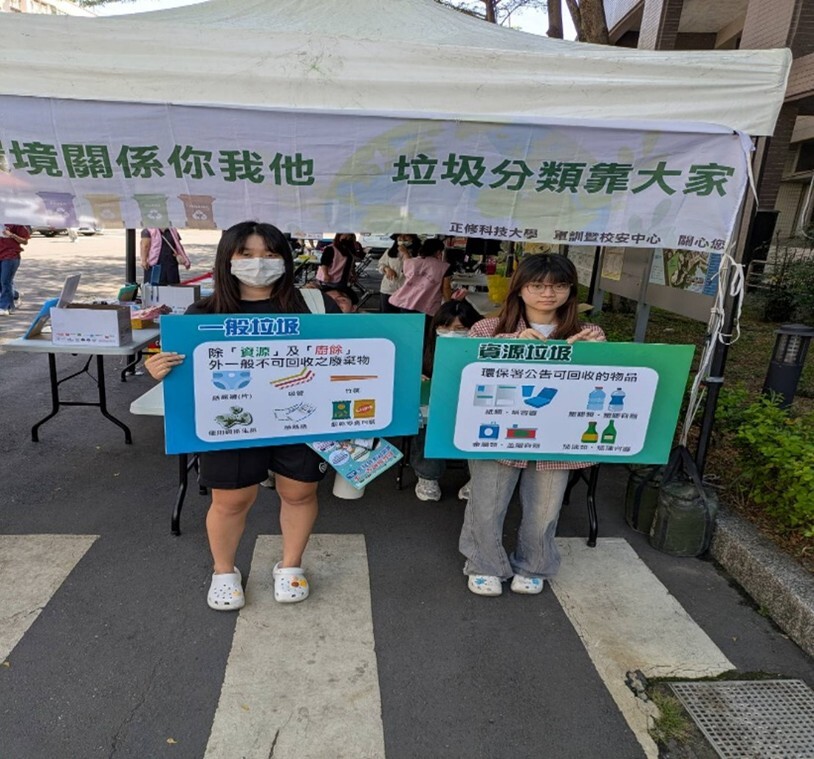
▲ Recycling Awareness Campaign |
|
▲Recycling station on campus |
▲Waste Sorting Demonstration Station |

◎ Laboratory and Chemical Management
1 Digital Source Management: Since 2021, the Chemical Cloud system has managed purchase applications, chemical flows, and usage volumes, including toxic and concerned chemical substances.
2 Chemical Reduction: Through lower-toxicity substitution and necessity reviews, CSU discontinued 41 of 56 regulated substances, achieving a 73.21% reduction.
3 Low-Carbon and Safe Operations: Using 2022 as the greenhouse gas baseline year, CSU integrates annual carbon targets with chemical reduction measures.
Chemical purchases require prior application and Environmental Safety Section approval through Chemical Cloud. Toxic and concerned chemical substances are reported quarterly, while hazardous machinery and workplace conditions undergo regular professional inspection and monitoring.
In 2025, CSU inspected 80 laboratories, completed 90 hazard reassessments, and managed 3,055 hazardous chemical records covering 56 toxic and concerned chemical substances.
◎ Food Conservation and Sustainability Education
CSU promotes food conservation and sustainable diets through dining management, environmental and food education, food waste recycling, experiential learning, and community partnerships. These initiatives encourage resource circulation, reduce waste, and cultivate environmentally responsible graduates. Key measures include:
1. Dining Management:
Promote appropriate portions and reduce food waste at source.
2. Food Waste Recycling:
Sort and recycle food waste through licensed service providers.
3. Sustainable Food Education:
Integrate food conservation, food and agricultural education, environmental awareness, and healthy diets into courses.
4. Experiential Learning:
Use campus practice sites to teach circular economy and sustainable food systems.
5. Community Engagement:
Partner with communities on surplus food sharing, resource reuse, and food education.
|
▲ Environmental and Sustainability Education Activity |
▲ Kindergarten Children Participating in a Sustainability Activity |

◎ Environmental and Sustainability Education Outcomes
Campus Environmental Initiatives
.Maintained 12 recycling stations and established one eco-friendly campus demonstration site.
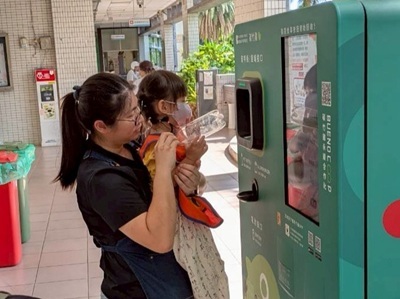
.Installed an AI-enabled recycling machine for PET bottles, batteries, and aluminum cans, reducing emissions by 90.195 tonnes CO₂e in 2025.
.Trained 10 student environmental volunteers to conduct campus inspections, environmental documentation, and advocacy.
Education and Campus Engagement
.Delivered seven sustainability courses and assessments, with 506 participations, covering microplastics, biodiversity, and environmental sustainability.
.Held four upcycling workshops, with 73 participations, transforming invasive plants and marine waste into useful products.
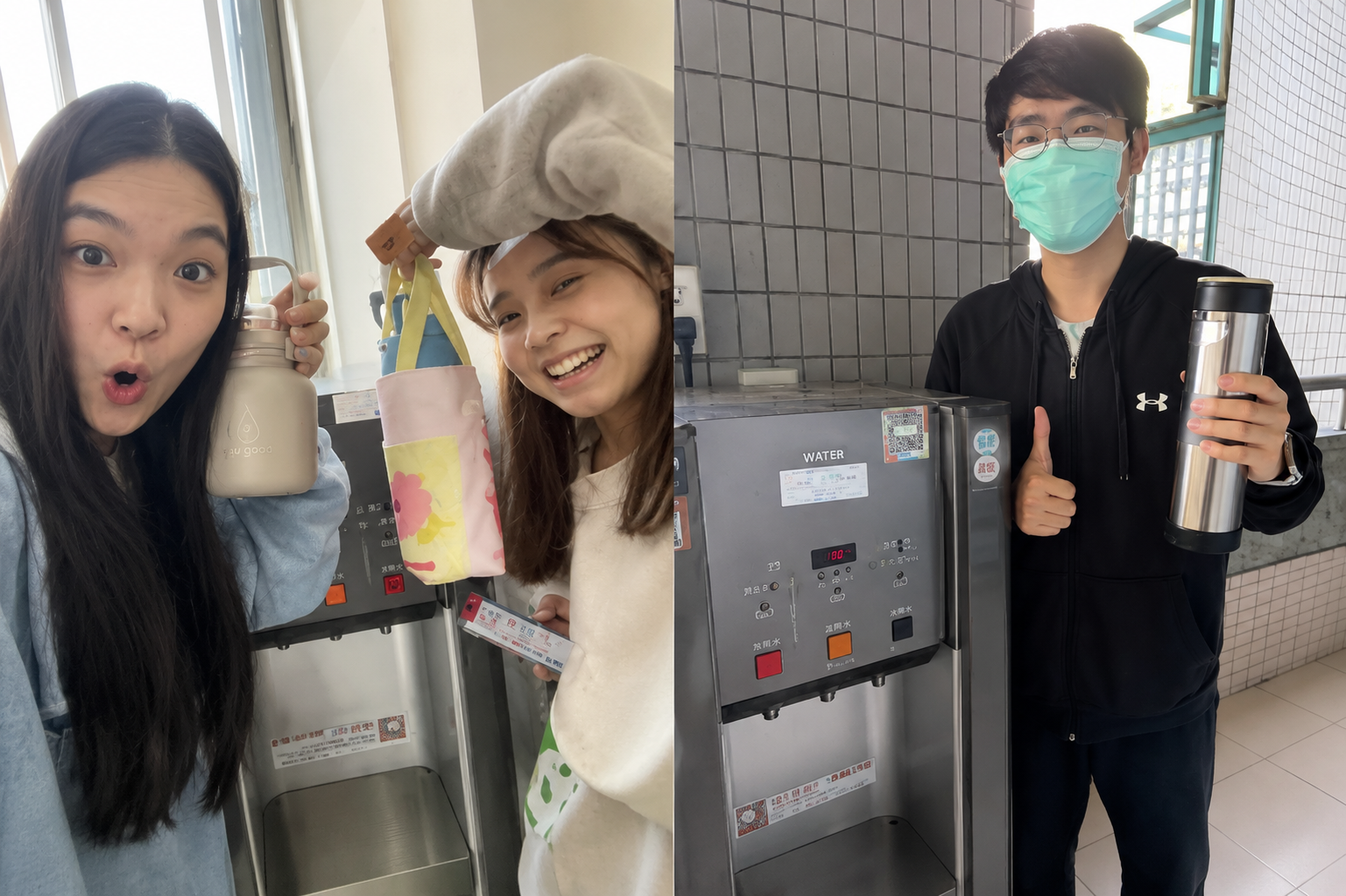
.Organized two reusable-cup campaigns, attracting 3,210 participations and avoiding approximately 5,005 600-ml PET bottles, equivalent to 1,991.99 kg CO₂e.
.Held six environmental education activities, with 1,304 participations, promoting waste reduction, energy conservation, and sustainable lifestyles.
Community-Based Environmental Education
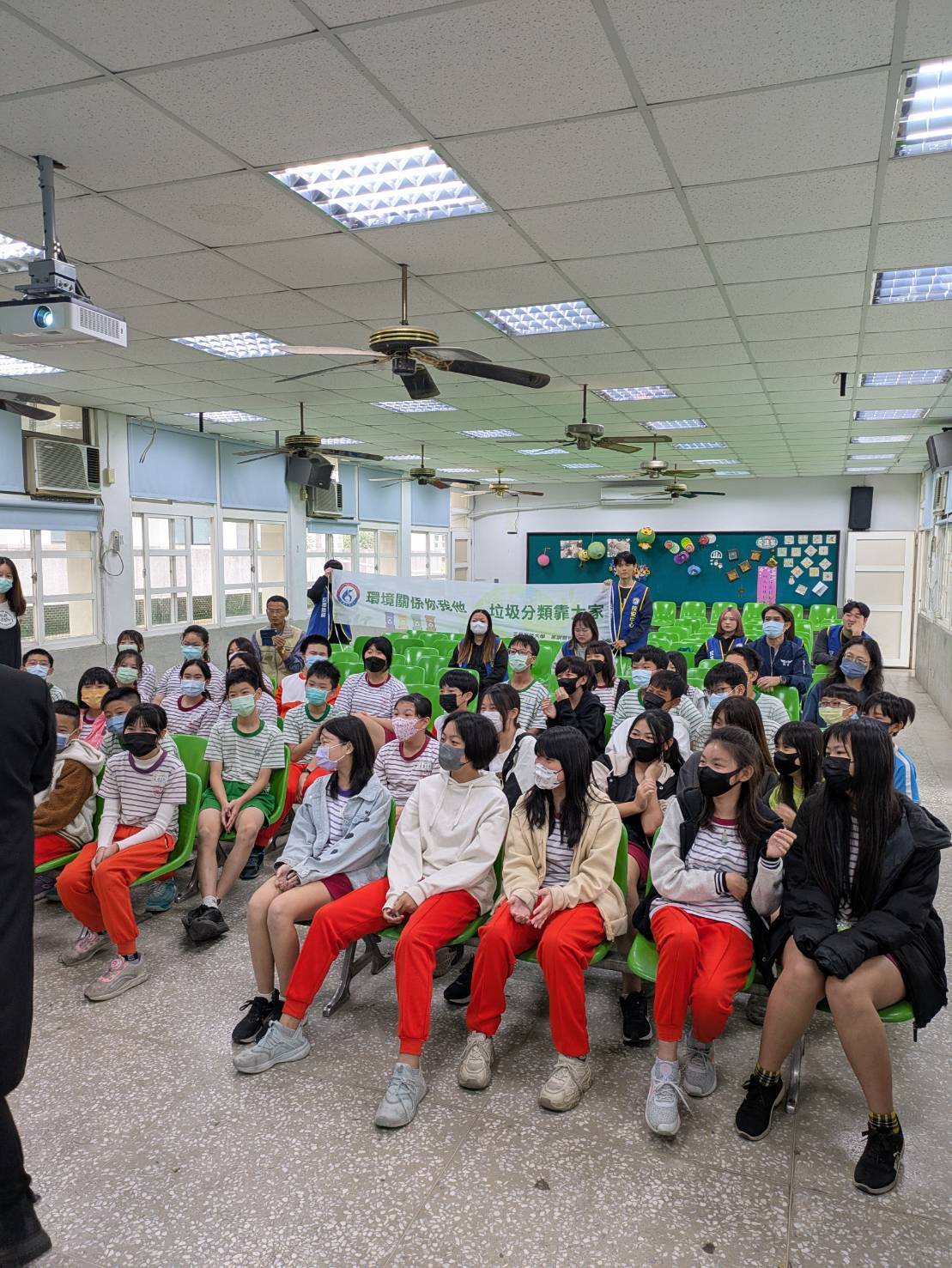
.Delivered environmental education at Meinong, Zhongtan, and Yunshui elementary schools through three activities with 167 participations.
.Organized visits to an AI-enabled recycling equipment factory and the Qigu Salt Fields to explore smart recycling, environmental change, and climate impacts.
Low-Carbon Diets and Food Education
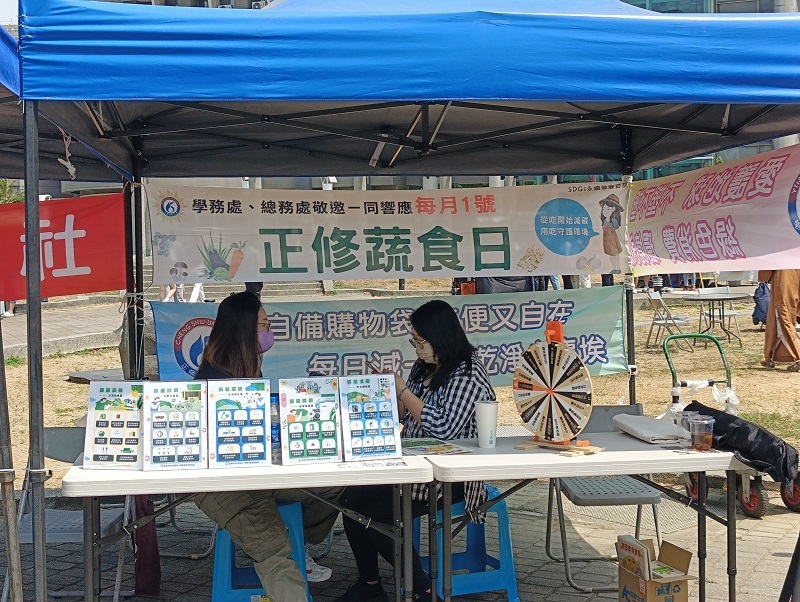
.Designated the first day of each month as CSU Vegetarian Day, encouraging lower-carbon diets.
.Integrated the SDGs into vegetarian education through a healthy cooking workshop using local ingredients, with 14 participants in the 2024–2025 academic year.
|
▲ CSU Kindergarten Children Experiencing AI-Enabled Recycling |
▲ Reusable Cup Campaign |
|
▲ Environmental Education at Zhongtan Elementary School |
▲ Promoting the First Day of Each Month as CSU Vegetarian Day |