USR Implementation Framework and Outcomes
Overall USR Development Plan
As USR and sustainability issues grow more diverse and complex, the Office of Social Responsibility and Sustainable Development has expanded its role in campus sustainability. It integrates USR and SDG resources, develops medium- and long-term plans, supports innovative teaching, and strengthens faculty and partner networks. Its annual USR and sustainability reports highlight the University’s achievements and enhance stakeholder engagement.
CSU’s USR Roadmap
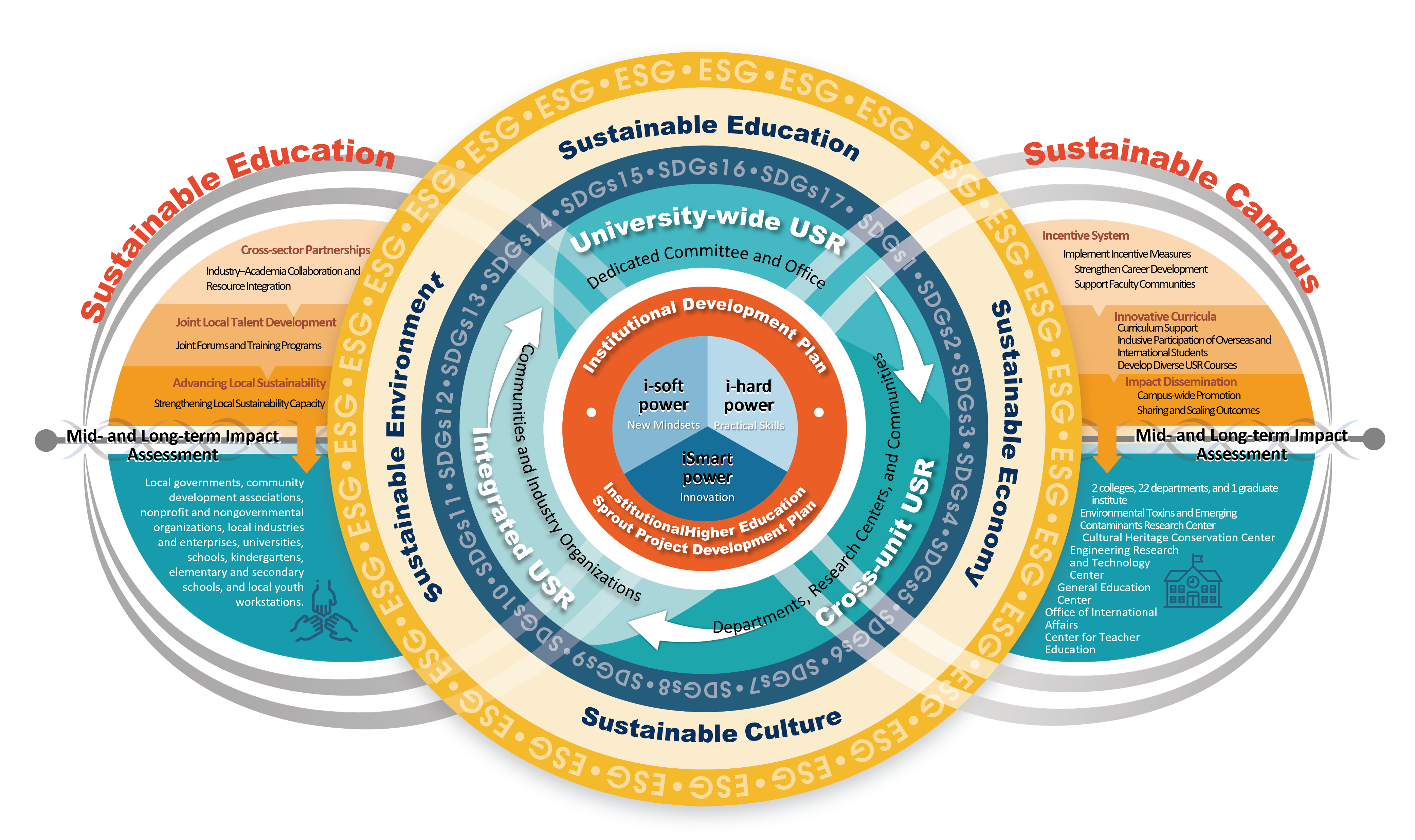
USR Project Implementation and Support Mechanism
CSU advances USR through four pillars: education, economy, culture, and environment. Projects are classified by maturity into Nursery, Seed, Sprout, and Deep-Cultivation stages. the Office of Social Responsibility and Sustainable Development oversees performance and funding, enabling effective projects to advance to the next stage.
In 2025, 29 faculty–student teams implemented 23 Nursery, four Seed, one Sprout, and one Deep-Cultivation project, with over 200 faculty members leading students in community engagement across Kaohsiung and Pingtung.
CSU’s Tiered USR Project Framework
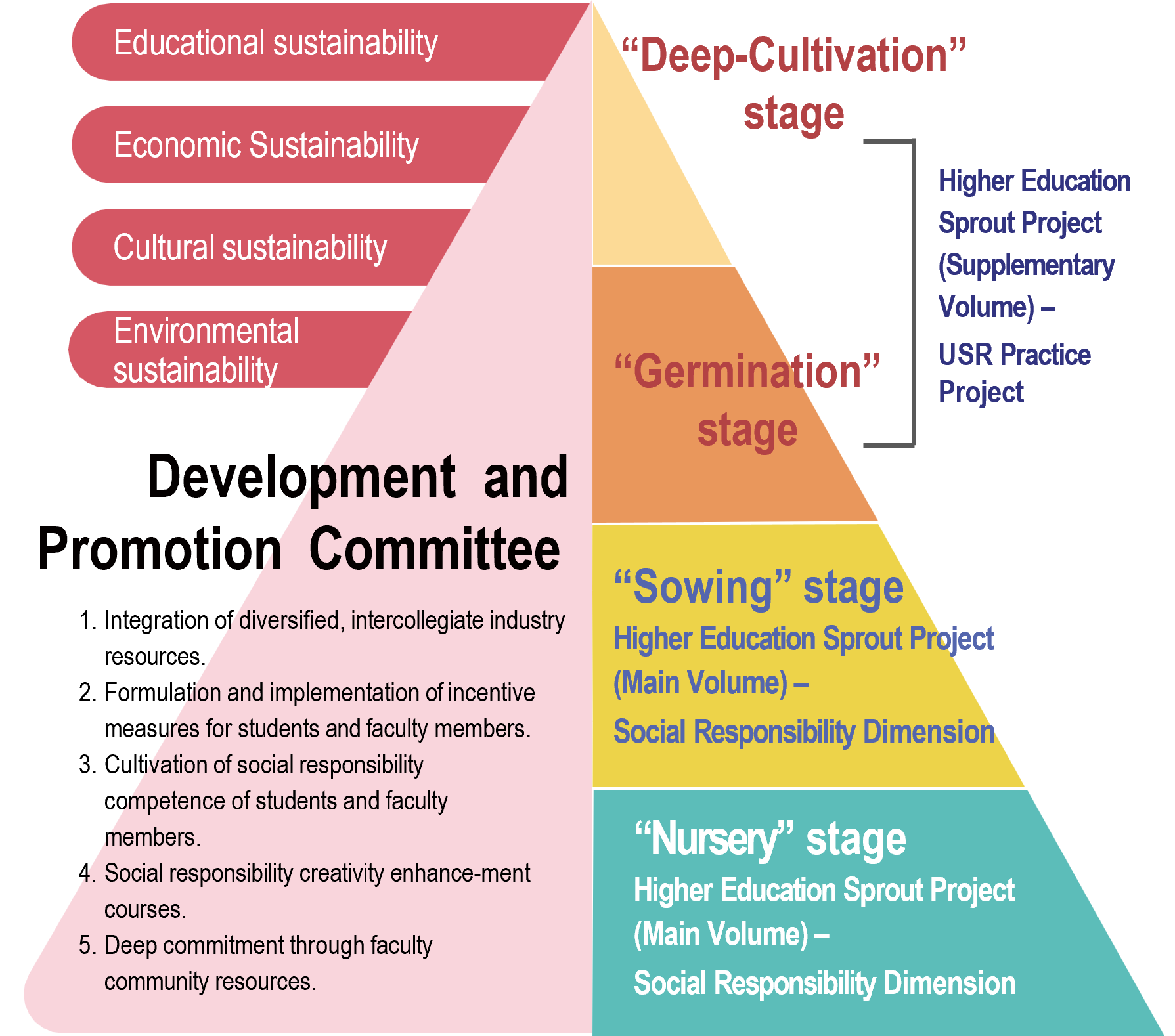
◎ Support Mechanisms for University Social Responsibility
To strengthen USR, CSU provides faculty, staff, and students with support for teaching innovation, talent development, and practical engagement. These mechanisms encourage sustainability action, expand social impact, and foster shared prosperity among the University, communities, and industry.
|
Item |
Faculty and Staff Support |
Student Empowerment and Sustainability Engagement |
USR Resource Integration Platform |
|
Support Mechanisms |
• Grants for sustainability teaching materials• Subsidies for USR and sustainability training and certification• Diverse promotion pathways, flexible pay, and teaching and research awards• Reduced teaching loads for USR project leaders |
• SDGs integrated across the curriculum• USR courses, interdisciplinary learning, and field-based teaching• Financial assistance supporting student participation• USR activities and field practice involving international students |
• USR Hub integrating internal and external resources• USR learning hubs• Grants for faculty communities• Nursery- and Seed-stage projects supported by university resources |
|
2025 Outcomes |
• 114 grants for sustainability-integrated teaching materials• 186 training and 50 certification grants, including 35 environmental sustainability training grants and two certification grants• 27 faculty members benefited: two through diverse promotion, two through flexible pay, six through awards, and 17 through reduced teaching loads |
• 95.1% of courses linked to the SDGs in AY 2024–2025• 83 USR innovation and social practice courses, with 4,181 enrollments• 102 participants completed two-stage sustainability training, progressing from coursework to community practice• 257 international student participations in social practice |
• 17 USR faculty communities, with 159 faculty participations• 23 Nursery- and four Seed-stage projects, continuing year-on-year growth• Over NT$25 million invested in USR |
|
Impact |
• Greater faculty capacity for USR and sustainability education• Stronger interdisciplinary collaboration and curriculum innovation |
• Enhanced social awareness, interdisciplinary practice, and global perspectives• Reduced barriers to student participation |
• Stronger interdisciplinary collaboration and knowledge sharing• Expanded USR teams, inter-university collaboration, and peer learning |
Number of USR Projects
USR-Related Investment, 2023–2025 (Unit: NTW)
|
Item |
2023 |
2024 |
2025 |
|
University Social Responsibility (USR) Projects |
12,463,000 |
11,500,000 |
12,430,000 |
|
Higher Education Sprout Project—University Social Responsibility |
11,755,350 |
10,144,769 |
7,344,694 |
|
Higher Education Sprout Project Appendix—Enhanced Financial Assistance for Students |
928,000 |
980,000 |
940,000 |
|
MOE Funding for the Institutional Development of Private Universities and Colleges |
5,775,800 |
3,549,557 |
2,370,835 |
|
Total |
30,922,150 |
26,174,326 |
23,085,529 |
Annual Investment in USR (Unit: NTW)
◎ Strengthening Medium- and Long-Term USR Impact Assessment
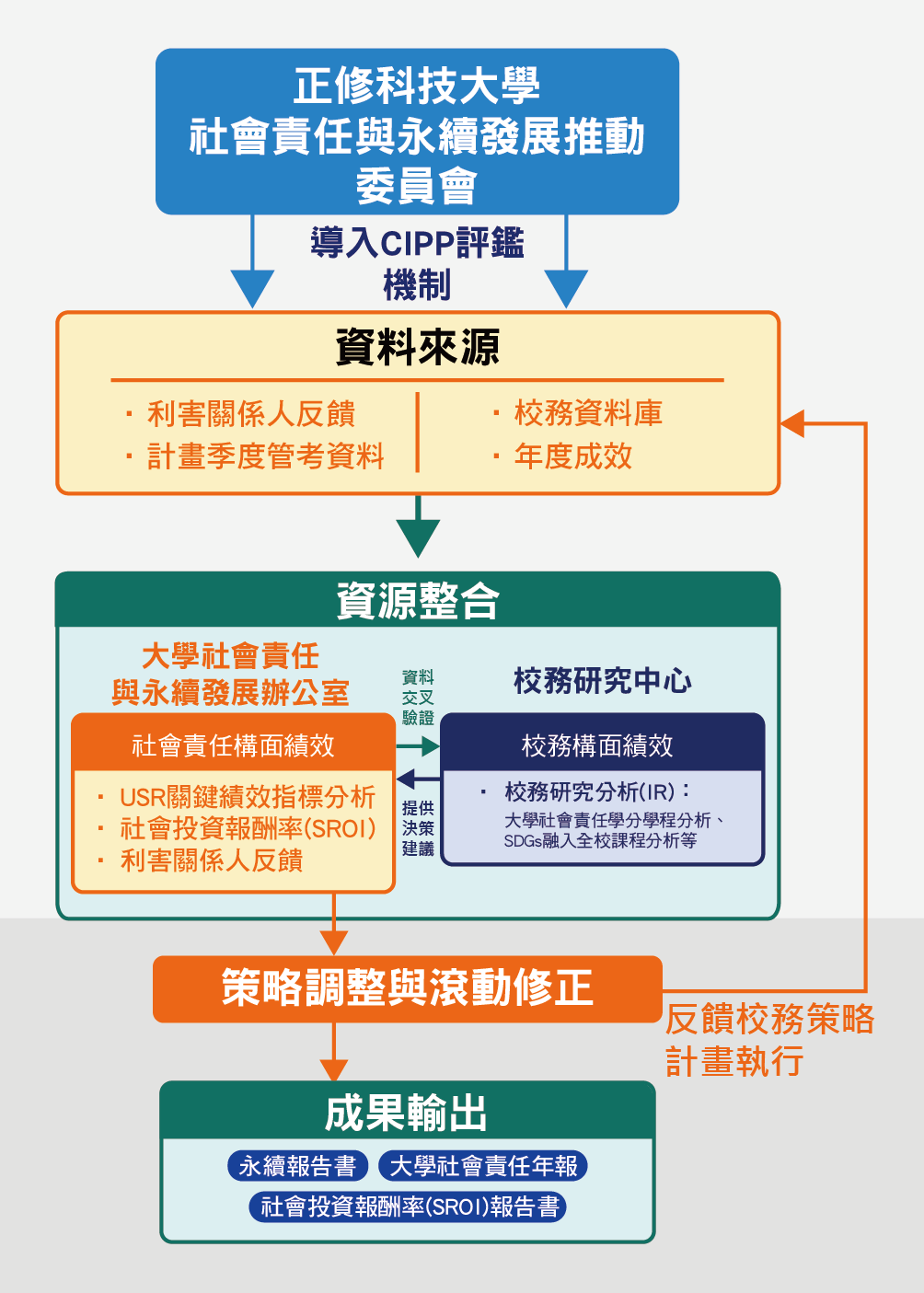
CSU evaluates long-term performance across four areas: institutional governance, talent development, local needs, and global engagement. Reviews are conducted each June and November using data analysis and cross-unit dialogue to track progress and refine strategies.
Led by the Office of Social Responsibility and Sustainable Development in collaboration with the Institutional Research Center, CSU integrates institutional data, project feedback, and stakeholder input through a dual-track framework of Key Performance Indicators (KPIs) and Social Return on Investment (SROI). the results guide strategic planning, resource allocation, and project implementation, creating a continuous cycle of improvement.
Published every March, the report discloses stakeholder engagement, performance indicators, and USR outcomes, strengthening sustainable governance and campus–community development.
|
|
|
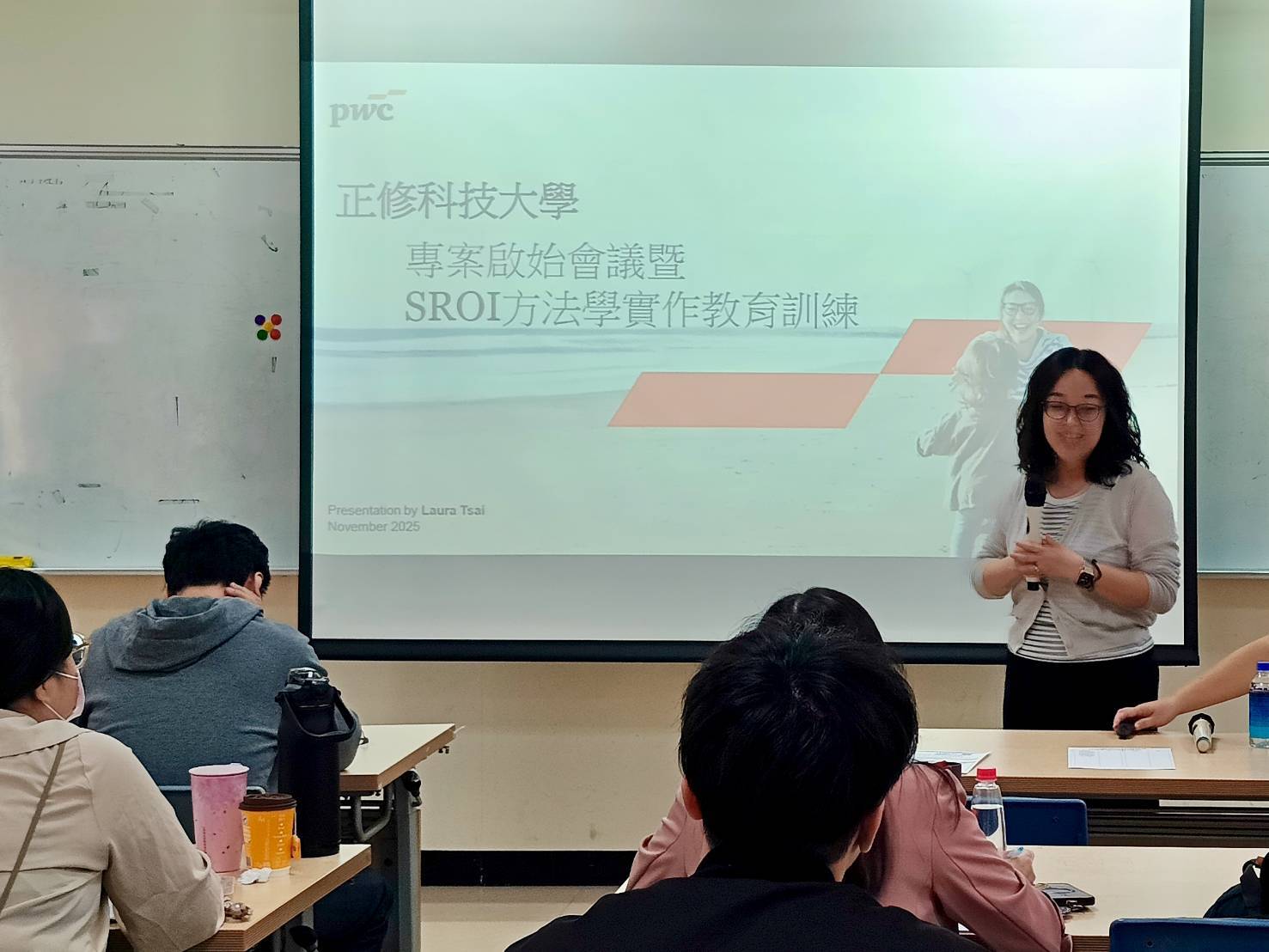
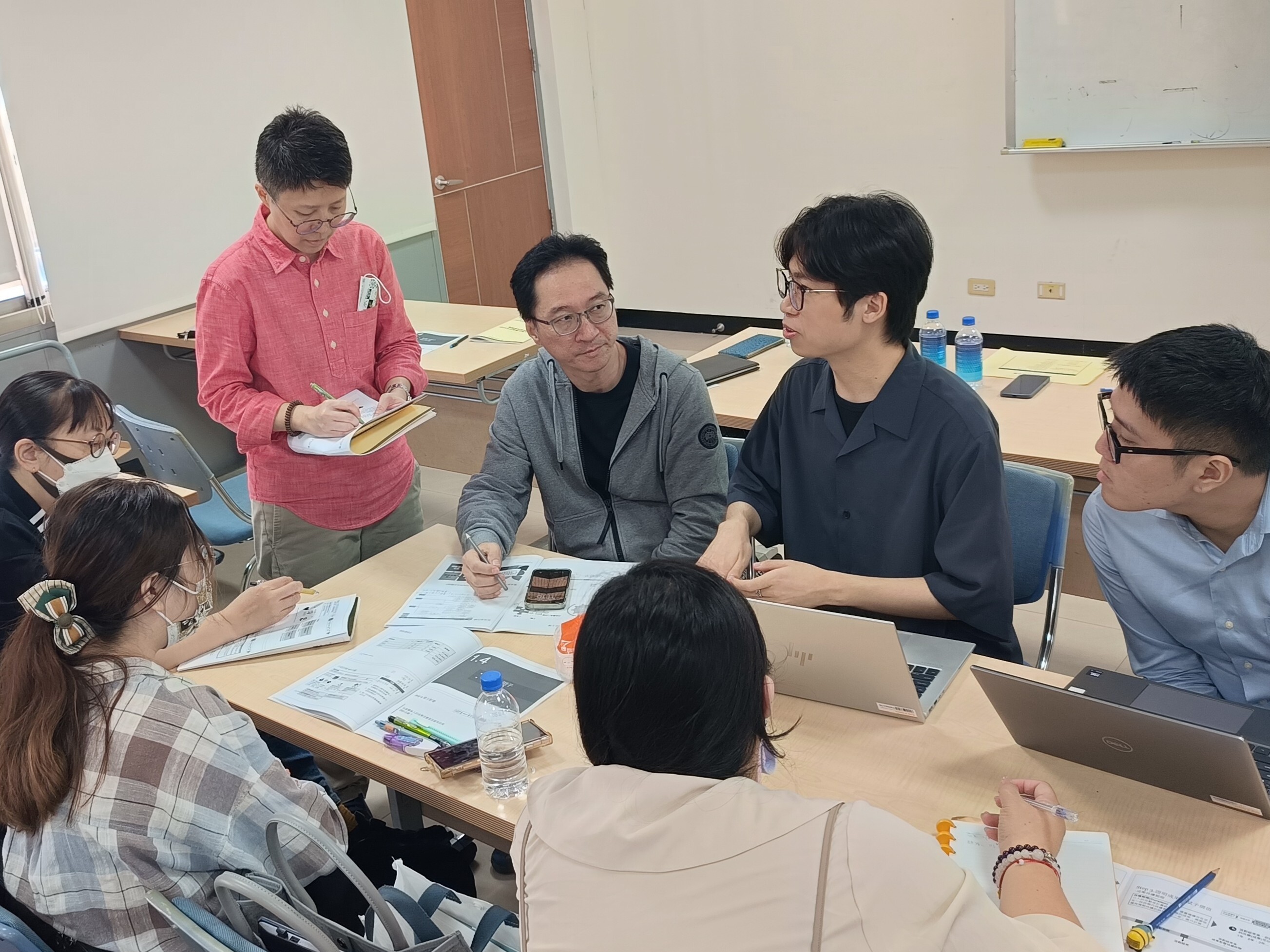
Medium- and Long-Term Impact Assessment Process
USR Practice Sites
Drawing on its 2017–2025 Higher Education SPROUT and USR experience, CSU has expanded community engagement across Kaohsiung and Pingtung through four sustainability pillars: education, economy, culture, and environment.
In 2025, activities reached 28 administrative districts and 211 partner organizations, engaging over 4,200 local participants and supporting 77 businesses.
Building on established partnerships, CSU continues to develop USR teams while strengthening initiatives in environmental protection, ecology, and carbon reduction, reinforcing its leadership in talent development and regional sustainability.
USR Practice Map
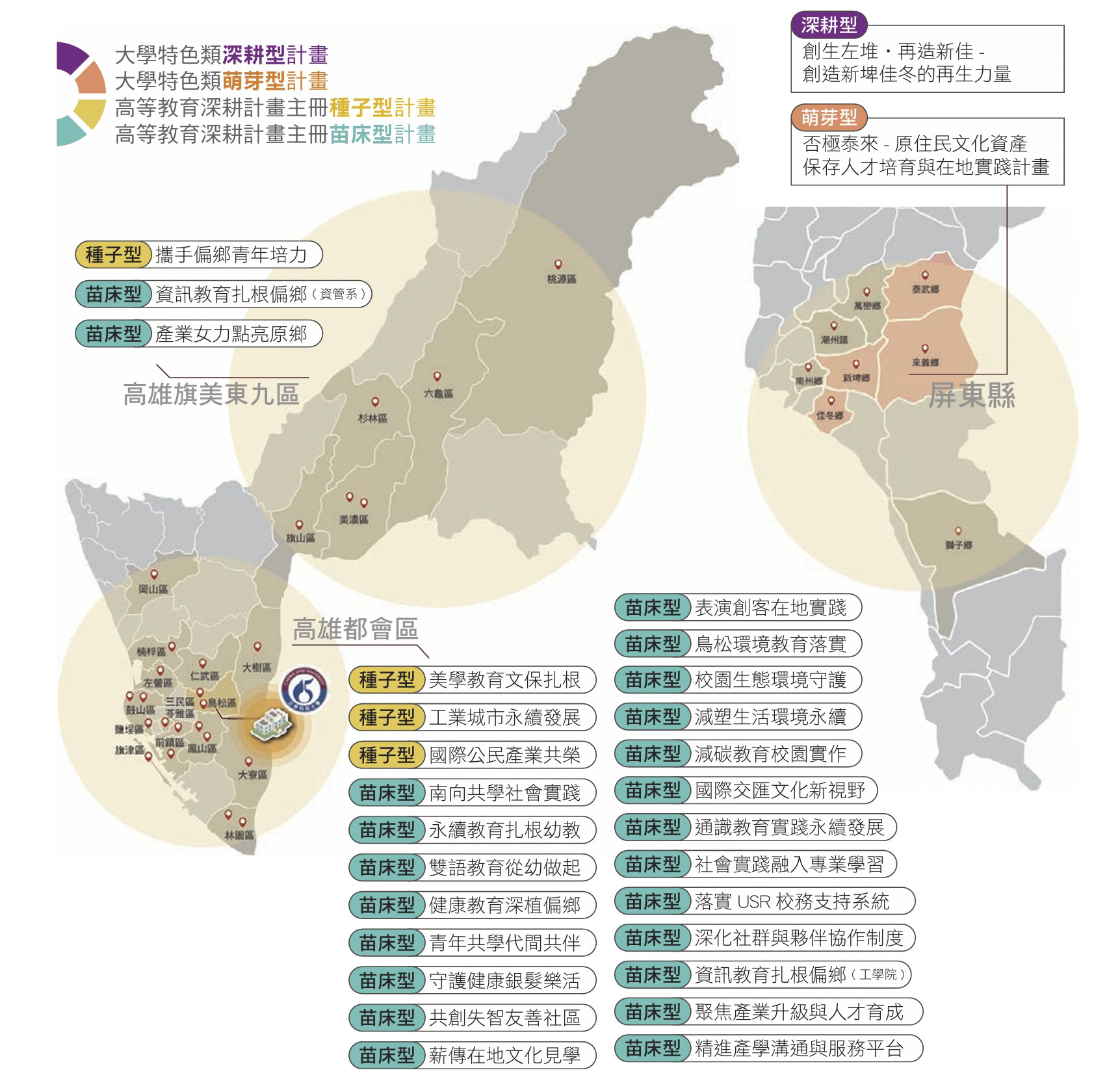
Number of USR Practice Sites in 2025
|
Number of Areas |
Administrative Districts |
|
20 in Kaohsiung |
Taoyuan, Liugui, Meinong, Shanlin, Qishan, Gangshan, Nanzih, Dashu, Zuoying, Renwu, Niaosong, Gushan, Sanmin, Lingya, Yancheng, Cianjhen, Cijin, Fengshan, Daliao, and Linyuan |
|
8 in Pingtung |
Taiwu, Wanluan, Chaozhou, Nanzhou, Laiyi, Xinpi, Jiadong, and Shizi |
USR Outcomes
Diverse Learning, Sustainable EducationEducation transforms communities and drives local sustainability. Faculty and students serve rural communities and schools, training university students as teaching assistants and delivering courses in coding and maker education, health, bilingual early childhood education, sustainability, and active aging. These efforts bridge urban–rural education gaps, promote equal access, and strengthen local talent and innovation. |
||
|
Category |
Initiatives |
Responsible Units |
|
Nursery-Stage Projects |
• Integrating social practice into professional learning |
Office of Academic Affairs; Office of Student Affairs; College of Engineering; College of Health and Management; College of Life Creativity; Center for General Education; Extension Education Center |
|
Sowing Stage Project |
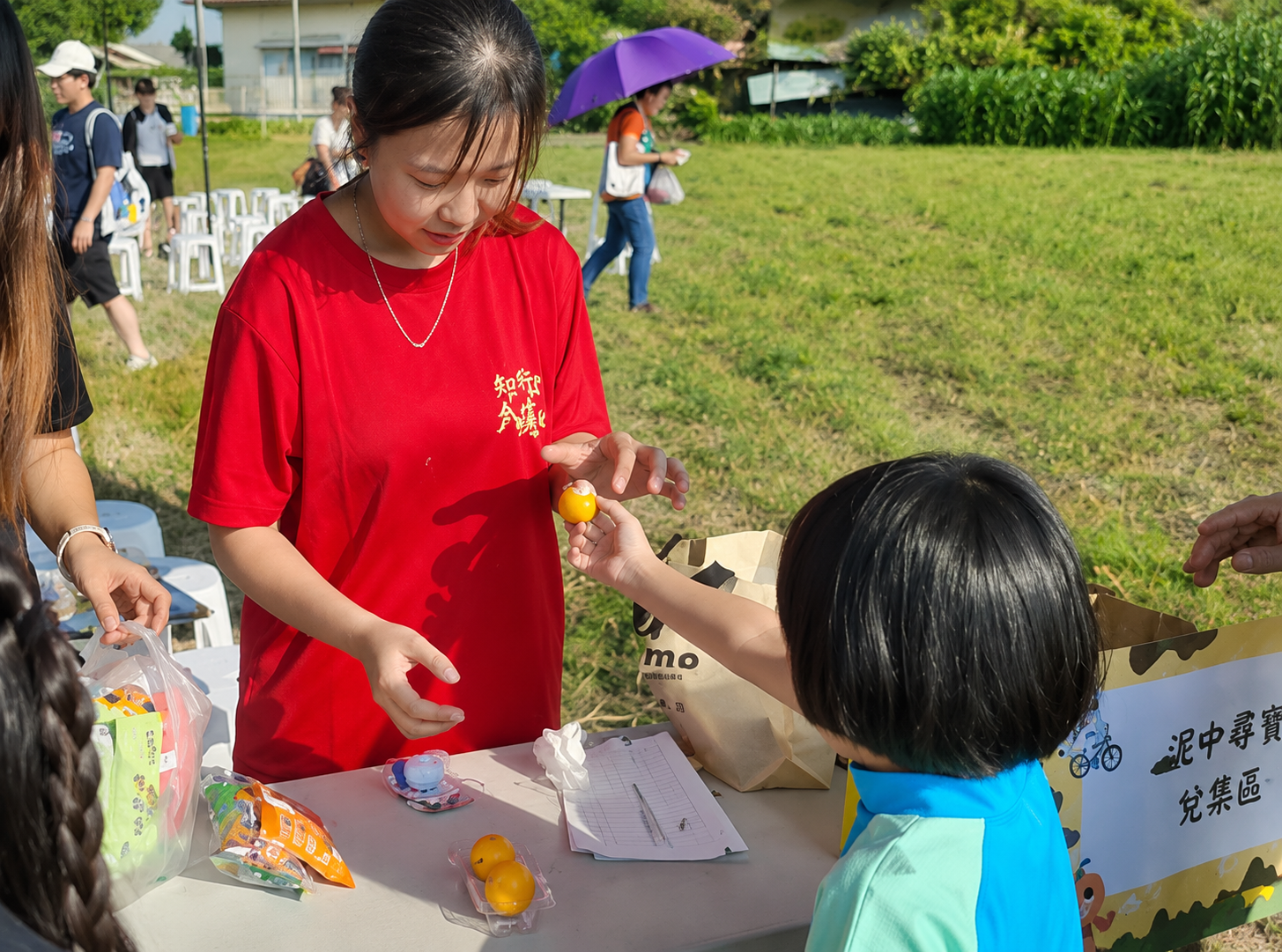
• Empowering rural youth through partnership |
College of Health and Management |
|
▲ Early Childhood Care and Education students empower local youth
|
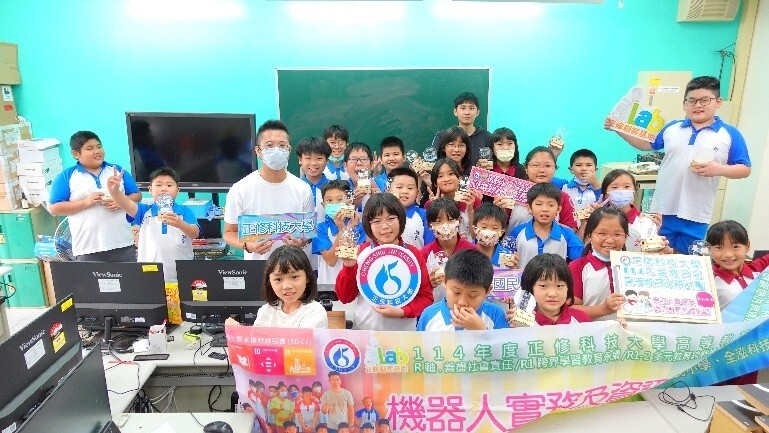
▲ College of Engineering Team Hosts an Information Education Summer Camp
|
|
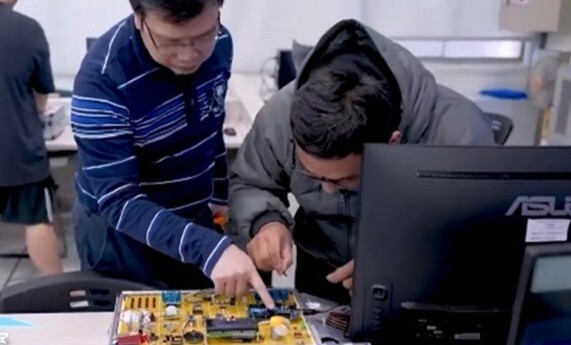
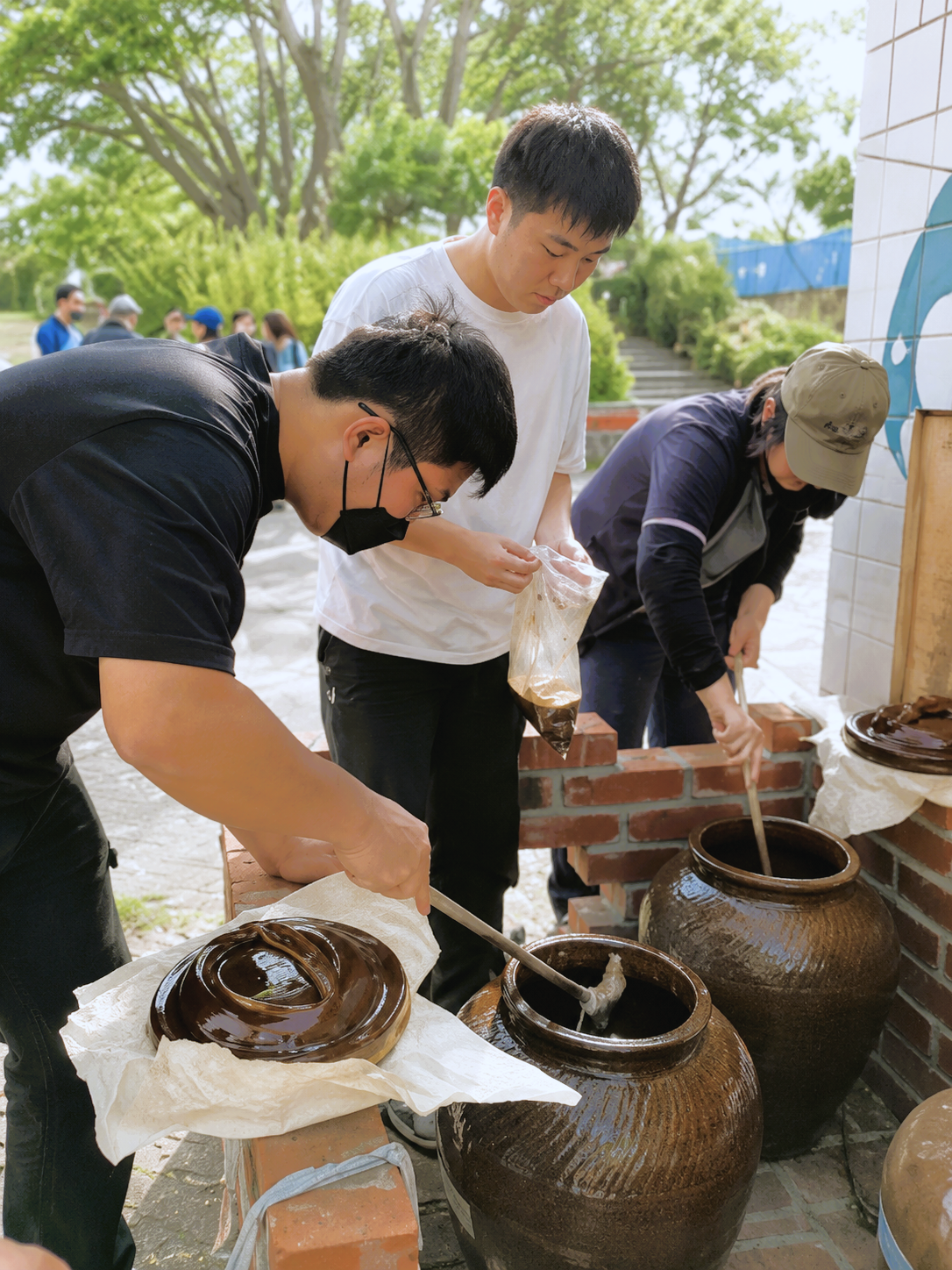
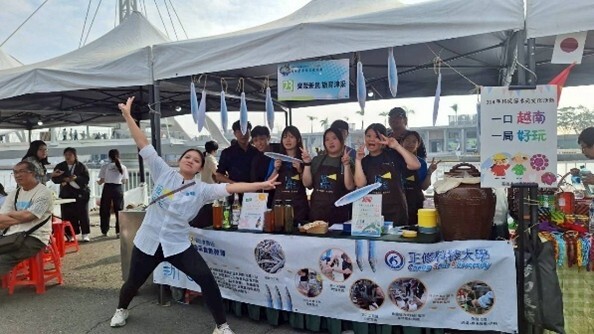
Industry Partnerships, Sustainable EconomyWhen local industries thrive and quality of life improves, young people are inspired to return home and pursue their dreams. Focusing on agriculture, tourism, and machine tools across Kaohsiung and Pingtung, CSU connects talent development with industry needs. Faculty and students support regional innovation through industry communities and stronger university–industry alliances. |
||
|
Category |
Initiatives |
Responsible Units |
|
Nursery-Stage Projects |
• Empowering Indigenous communities through women in industry • Advancing industrial upgrading and talent development • Strengthening university–industry communication and service platforms |
Physical Education Center; Engineering Research and Technology Center |
|
Sowing -Stage Project |
• Global citizenship and shared industrial prosperity |
College of Life Creativity |
|
▲ Developing Talent for the Machine Tool Industry |
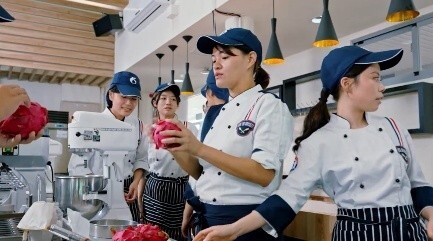
▲ Food and Beverage Management Students |
|
▲ Promoting Cijin Fish Sauce at the 2025 Migrants Festival |
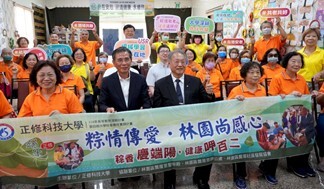
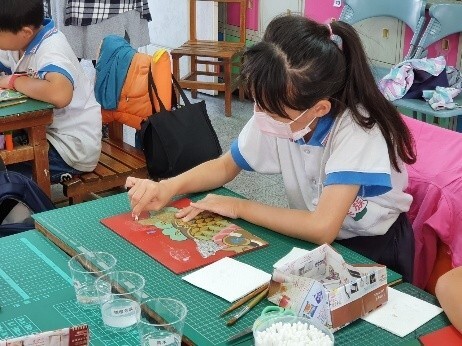
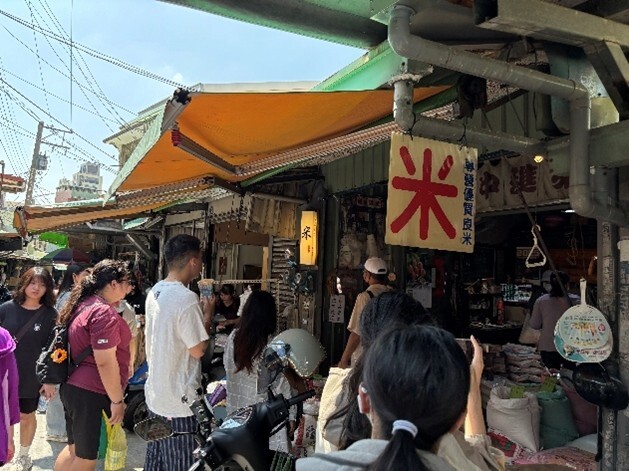
Local Engagement, Sustainable CultureBy listening to community elders and understanding the land, we become not only companions but also stewards of cultural heritage. Integrating university and community resources, faculty and students engage in community care, Indigenous inclusion, and the preservation of traditional performance arts through expert guidance and field practice. |
||
|
Category |
Initiatives |
Responsible Units |
|
Nursery-Stage Projects |
• Strengthening the institutional USR support system • Deepening community and partner collaboration • Preserving local culture through experiential learning • Community-based maker practices in the performing arts • Expanding cultural perspectives through international exchange |
Office of Academic Affairs; Center for General Education; Physical Education Center |
|
Sowing Stage Project |
• Advancing aesthetic education and cultural heritage conservation |
Cultural Heritage Conservation Center |
|
▲ Eight Consecutive Years of Dragon Boat Festival Community Care in Linyuan
|
▲ Hands-On Conservation Workshop Promoting Cultural Heritage Preservation
|
▲ Community Heritage Field Study—Exploring Local history
|
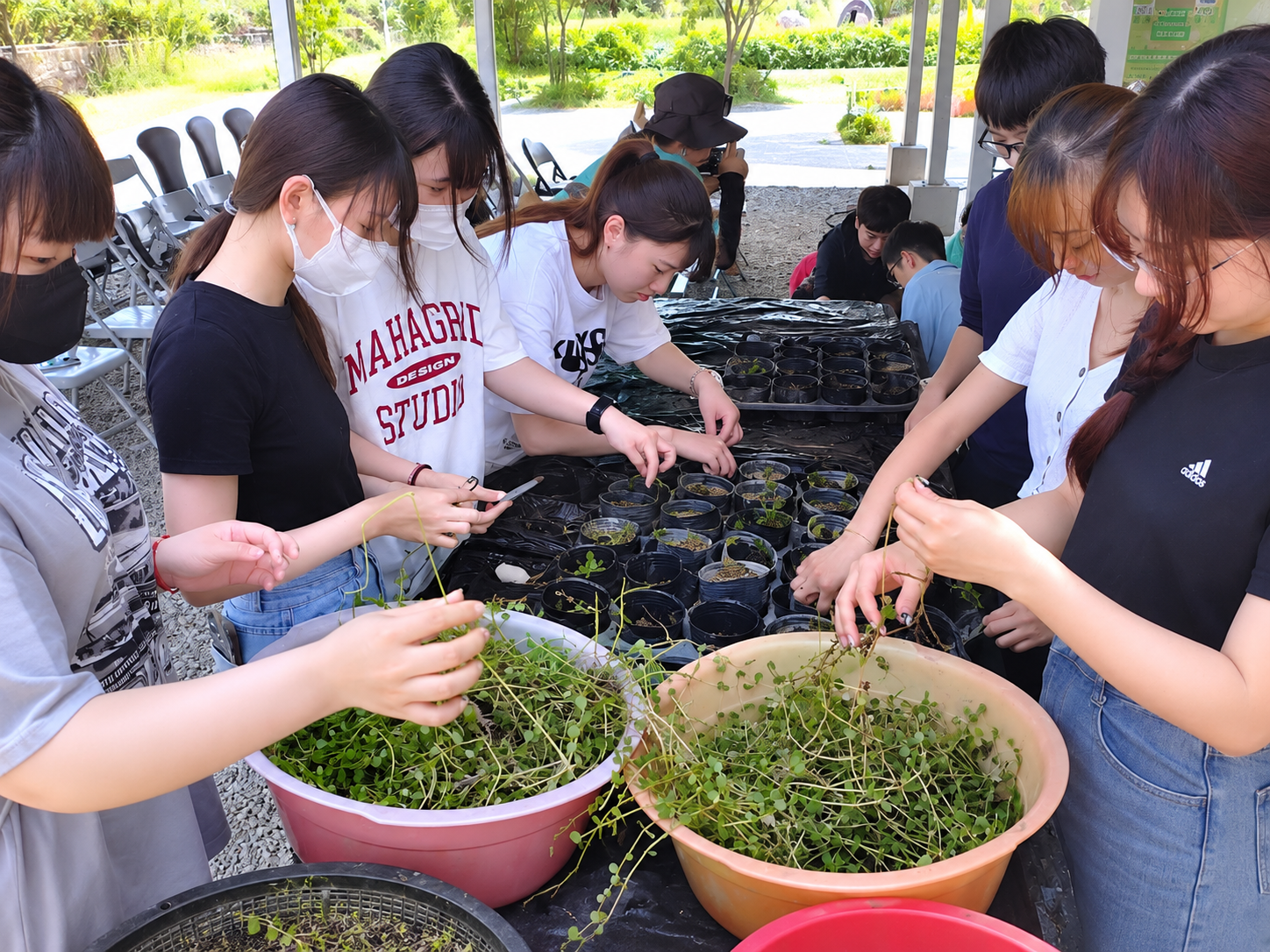
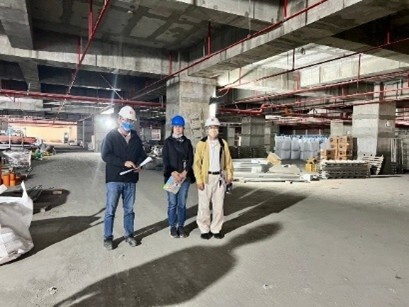
shared Prosperity, Sustainable EnvironmentThrough collective action, we reduce campus emissions and work with industry to build a sustainable, low-carbon port city. CSU brings together administrative units, academic departments, and the Environmental Toxins and Emerging Contaminants Research Center to advance carbon reduction, environmental sustainability, and food safety while supporting local talent and industrial transformation. |
||
|
Category |
Initiatives |
Responsible Units |
|
Nursery-Stage Projects |
• Advancing environmental education in Niaosong • Protecting campus ecosystems • Reducing plastic for environmental sustainability • Implementing campus carbon-reduction education |
College of Life Creativity; Office of General Affairs; Office of Student Affairs |
|
Sowing Stage Project |
• Sustainable Development for Industrial Cities |
Environmental Toxins and Emerging Contaminants Research Center |
|
▲ Field-based learning—pheasant-tailed jacana habitat restoration in meinong
|
▲ Environmental Research Center Supports Businesses in Sustainable Transformation
|
Sprout-Stage Project
|
|
From Adversity to Renewal: Indigenous Cultural Heritage Conservation, Talent Development, and Community Practice |
|
|
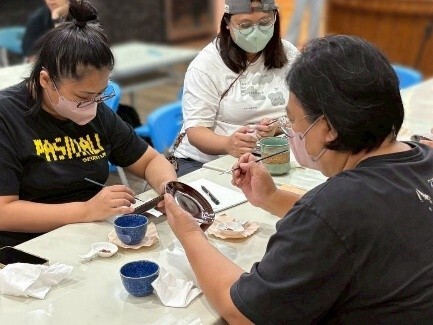
Centered on Indigenous cultural heritage preservation, faculty from the Cultural Heritage Conservation Center deliver Micro-Conservator courses covering diverse materials. Through flipped and field-based learning, students conduct artifact assessments in Indigenous communities, connecting theory with practice. |
||
|
Strategy 1: Building Local Conservation Expertise Faculty from the Cultural Heritage Conservation Center deliver seminars and hands-on micro-conservation courses covering diverse materials. the program trains local museum staff and makes routine conservation locally accessible. Strategy 2: Creating a Seamless Talent Pipeline Flipped and field-based courses are delivered in Indigenous museums, supported by interdisciplinary learning and an art conservation and scientific examination credit program. This pathway connects bachelor’s and master’s education with employment. Strategy 3: Adding Cultural Value for Sustainable Development Faculty and students document traditional histories, symbols, and patterns while applying AI to strengthen cultural innovation and support community revitalization. Strategy 4: Sustaining Culture through Digital Archiving In partnership with national Indigenous cultural institutions, the project uses 3D technology to digitize artifacts, preserve fine details, and expand long-term access to conservation knowledge. |
||



|
▲ Participants Experience Kintsugi Ceramic Repair
|
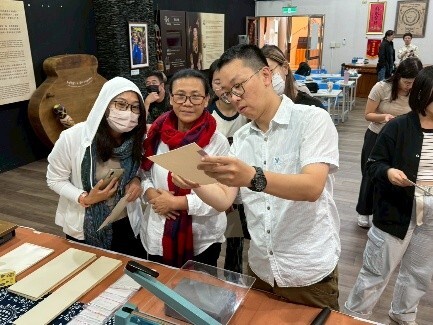
▲ Conservator Demonstrates Repair Techniques
|
|
▲ Micro-Conservation Toolkit |
|

|
2025 Highlights.The project achieved an SROI of 5.51, generating NT$5.51 in social value for every NT$1 invested. .Dedicated conservation facilities were established in Taiwu and Laiyi, Pingtung, with professional workstations, inspection instruments, and digital archiving equipment. These resources empower local museum staff to undertake basic conservation independently. .AI and other digital technologies helped communities transform cultural elements into competitive cultural and creative products. .The model expanded to museums and cultural institutions in Shizi and Sandimen, the Indigenous Peoples Cultural Development Center, and the Preparatory Office of the National Museum of Indigenous Peoples. Conservation seminars and inter-museum collaboration further strengthened cultural sustainability and social impact. USR Impact StoryDeveloping “Micro-Conservator” Courses for Community-Based Heritage ProtectionCSU’s Micro-Conservator courses integrate theory and practice, training participants to assess artifact deterioration, use conservation tools, and follow professional ethics. the program cultivates conservation talent, strengthens local museums, and supports community participation and sustainable Indigenous heritage preservation. in 2025, four sessions recorded 128 participations. Students also developed an Artifact Conservation Toolkit with UV magnifying lamps and wool brushes to standardize conservation work and extend its educational, cultural, and social impact.
|
|
▲ USR Short Film: Mending the Gaps in Time
|
Deep-Cultivation Stage Project
|
|
Revitalizing Zuodui:
|
|
|
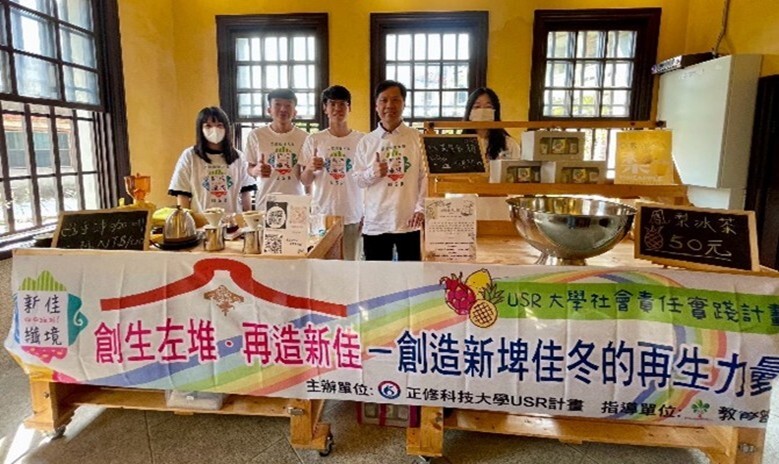
Focusing on Xinpi and Jiadong Townships in Pingtung County, the project addresses rural population loss, limited industrial growth, and underused cultural assets. Integrating CSU’s interdisciplinary expertise with local needs, it promotes agricultural value creation, tourism, branding, and youth employment to advance economic sustainability and encourage young people to remain in their hometowns. |
||
|
Strategy 1: Agricultural Value Creation and Branding The project applies smart agriculture and blockchain traceability to improve product quality and consumer trust. Processing, branding, and integrated online and offline marketing enhance market competitiveness. Strategy 2: Cultural and Leisure Tourism Courses, cultural tours, and community initiatives connect local culture with natural assets. Revitalized public spaces and tourism routes strengthen local identity and visitor experiences. Strategy 3: Youth Employment and Local Food Integrating youth empowerment with food and agricultural education, the project provides farm-to-table learning, culinary training, product development, and entrepreneurship guidance to support local employment and sustainable food literacy.
|
||

|
|
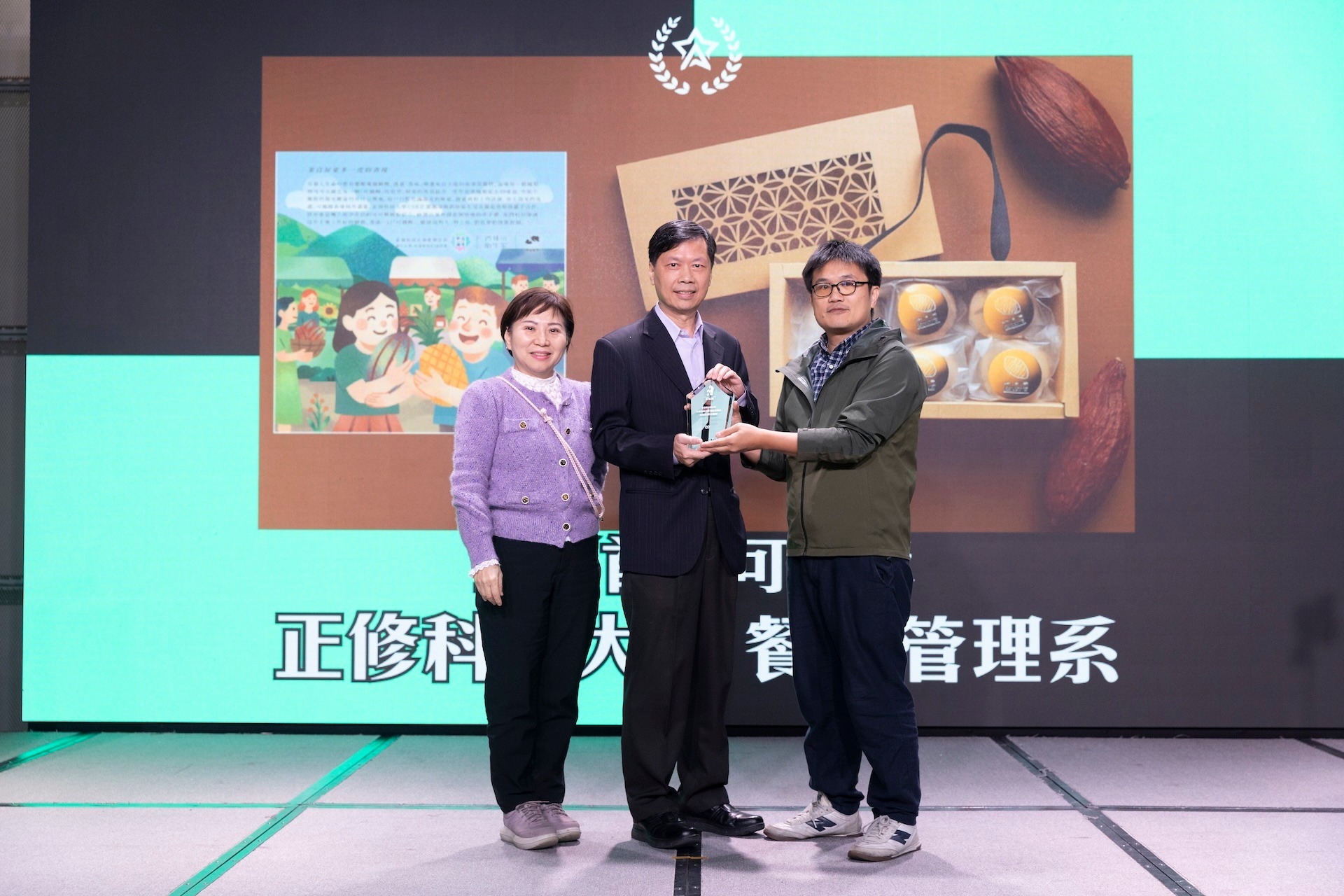
▲ 2025 Food Innovation Award – One-Star Award for Innovation in Food Education |
|
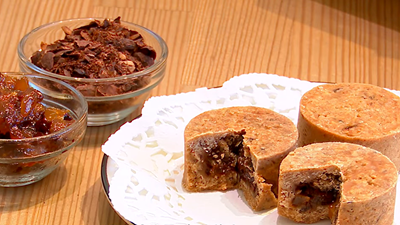
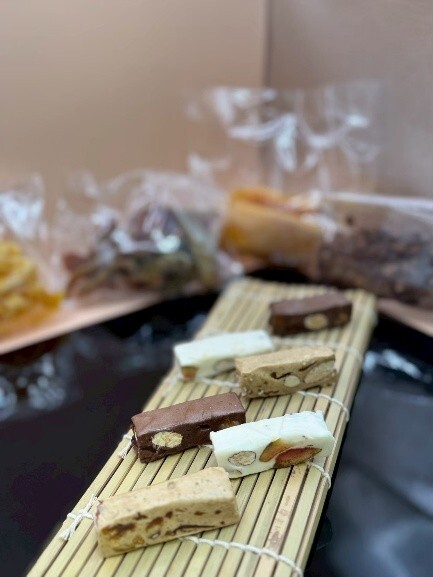
▲Pineapple Cakes and Fruit Nougat
|
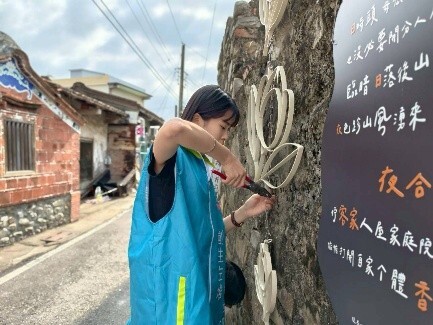
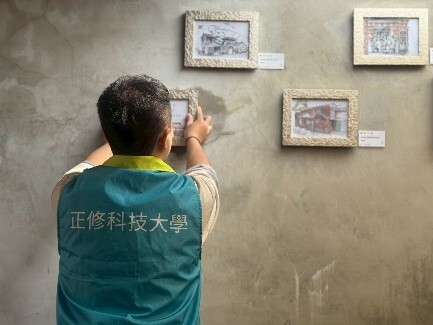
▲Renovation of Jiadong Poet’s Trail and Murals
|
|
|
▲Weekend Farmers’ Market at the Hsiao Family Historic Residence, Jiadong
|
|
2025 Highlights.The project achieved an SROI of 1.72, generating NT$1.72 in social value for every NT$1 invested. .Nineteen practice-based courses engaged 1,248 student participations, strengthening interdisciplinary learning and problem-solving skills. .Supported small farmers and local brands in product development and e-commerce, launching pineapple cakes and fruit nougat for overseas markets. .Entrepreneurship and career guidance encouraged nine young people to remain in or return to their hometowns. .Faculty and students from the Department of Architecture revitalized community spaces and cultural assets in Xinpi and Jiadong. USR Impact StoryRevitalizing Jiadong Through the Poet’S Trail and Gongxia StageThe restored Poet’s Trail combines local history, literature, and landscapes through murals, signs, improved paths, and guided tours, strengthening tourism and cultural heritage. the revitalized Gongxia Stage hosts community and cultural events, while partnerships between local businesses and young entrepreneurs cultivate tourism, culinary, and creative talent, supporting sustainable local development.The restored Poet’s Trail combines local history, literature, and landscapes through murals, signs, improved paths, and guided tours, strengthening tourism and cultural heritage. the revitalized Gongxia Stage hosts community and cultural events, while partnerships between local businesses and young entrepreneurs cultivate tourism, culinary, and creative talent, supporting sustainable local development.
|
|
▲ USR Impact Video - Revitalizing Zuodui: Regenerating Xinpi and Jiadong
|