CSU President Jui-Chang Kung Honored with Distinguished Teacher Award for 47 Years of Dedication to Vocational Education and Sustainable Talent Development
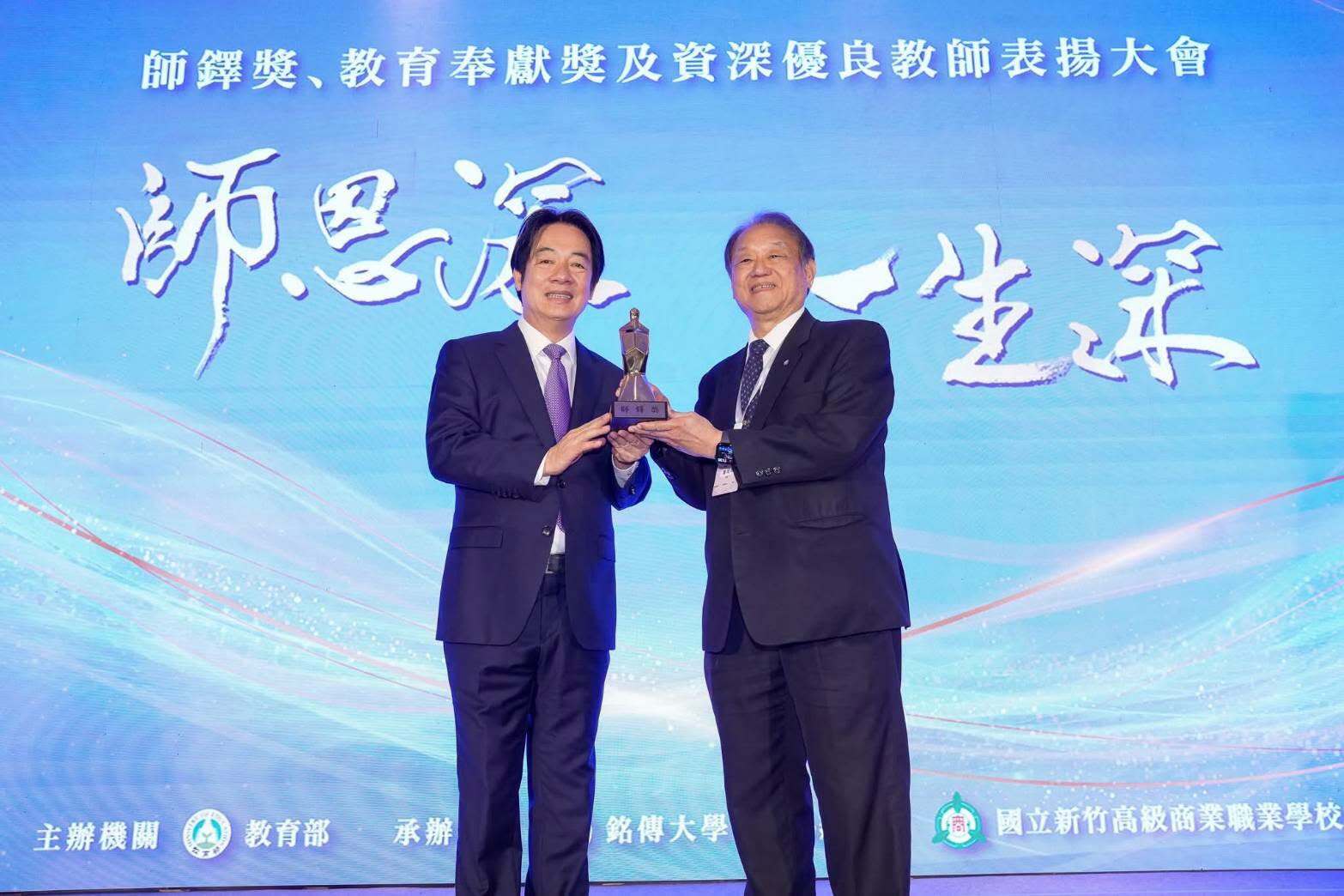
Cheng Shiu University President Jui-Chang Kung Receives Distinguished Teacher Award for 47 Years of Dedication to Technical and Vocational Education and Sustainable Talent Development
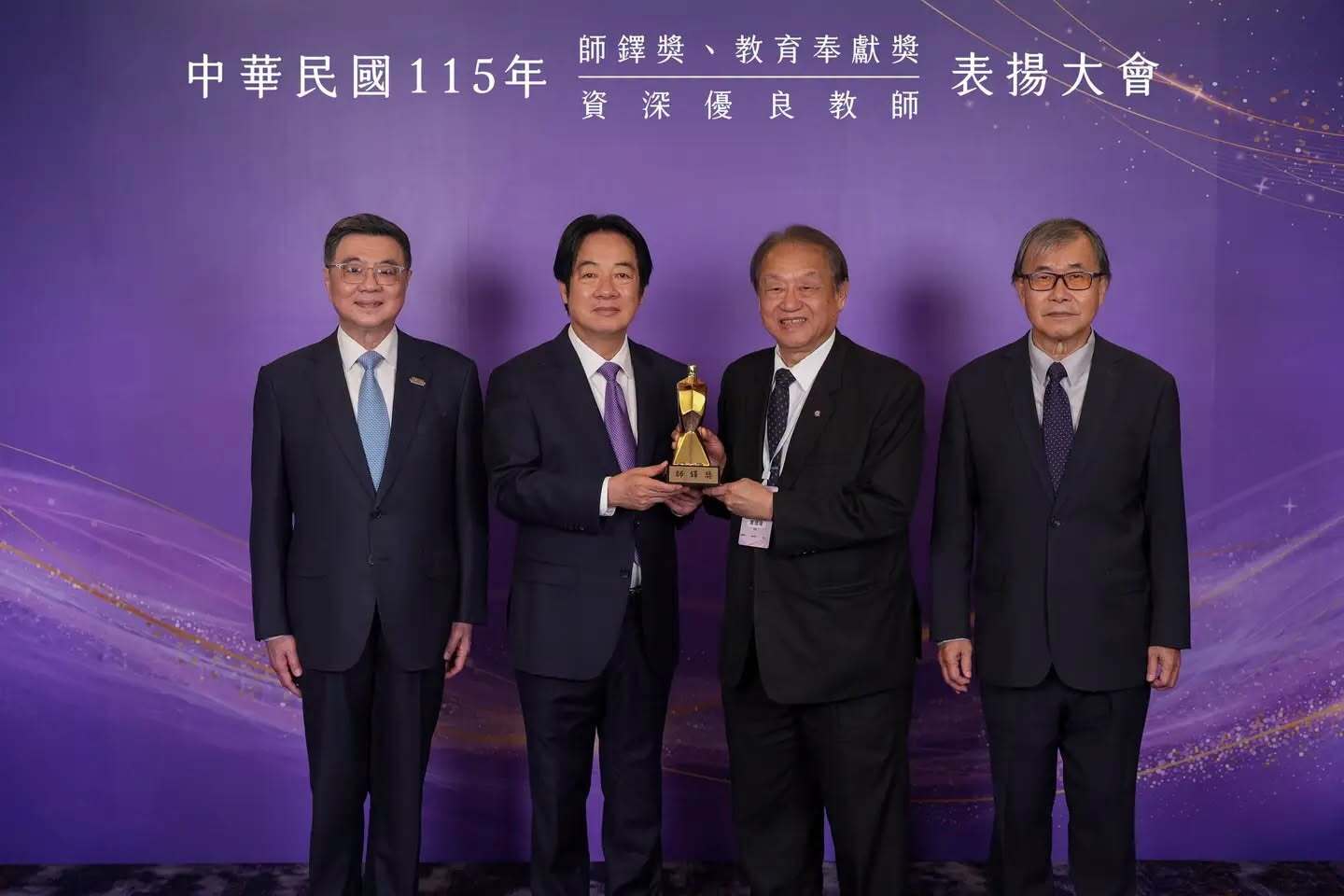
The Ministry of Education's 2026 Distinguished Teacher Award Ceremony was held on September 22 at the Sheraton Grand Taipei Hotel, where President Lai Ching-te personally presented the Distinguished Teacher Award, one of Taiwan's highest honors in education, to Cheng Shiu University President Jui-Chang Kung in recognition of his outstanding contributions to technical and vocational education.
With more than 47 years of dedication to technical and vocational education and over 32 years of service as university president since assuming the position in 1994, President Kung has consistently advanced teaching innovation, industry–academia collaboration, talent development, and sustainable campus development. Under his leadership, Cheng Shiu University (CSU) has leveraged its strengths in practice-oriented technical and vocational education to address industry needs and societal challenges while advancing university sustainability and social responsibility.
47 Years of Dedication to Technical and Vocational Education: Leading Cheng Shiu University Toward Sustainable Development
After completing his studies in the United States, President Kung returned to Taiwan and devoted himself to technical and vocational education. Throughout his career, he has served in various administrative and leadership positions, including section chief, director, vice president, and president. Under his leadership, Cheng Shiu was upgraded to an institute of technology in 1999 and renamed Cheng Shiu University in 2003, establishing a solid foundation for the institution's long-term development.
Guided by the educational philosophy of "Pragmatism and Innovation," President Kung emphasizes professional knowledge, practical skills, and professional ethics. Through skills certification, professional licensing, collaborative teaching with industry experts, and professional competitions, CSU strengthens students' employability and competitiveness while advancing Sustainable Development Goal (SDG) 4, Quality Education, and the principles of lifelong learning.
Over the years, President Kung has received numerous honors, including an Outstanding Contribution Award for Technical and Vocational Education, recognition as one of the Ten Outstanding Private School Presidents, and the Ministry of Education's 6th Technical and Vocational Education Contribution Award. His latest recognition with the Distinguished Teacher Award further highlights his longstanding commitment to technical and vocational education and the sustainable development of the University.
Strengthening Industry–Academia Collaboration to Cultivate Talent for Sustainable Industrial Transformation
In response to industrial transformation and evolving workforce demands, CSU actively aligns its educational initiatives with national strategic industry policies. Through the Industry–Academia Cooperative Education Program and specialized cooperative education programs for overseas Chinese students, the University integrates professional education with real-world industry environments, enabling students to acquire workplace competencies and strengthening the connection between talent development and industry needs.
CSU has been recognized by the Chinese Institute of Engineers for excellence in industry–academia collaboration for 14 consecutive years. The University has also established specialized technology research centers to facilitate joint efforts between faculty members and industry partners in technology development, product research and development, and technology transfer, promoting the commercialization of academic research outcomes.
Through industry–academia partnerships and technological innovation, CSU continues to cultivate professionals equipped with interdisciplinary integration capabilities, practical application skills, and sustainability competencies, contributing to SDG 8, Decent Work and Economic Growth, and SDG 9, Industry, Innovation and Infrastructure.
Advancing AI-Driven Educational Innovation to Enhance Digital and Sustainability Competitiveness
In response to rapid developments in artificial intelligence and digital technologies, President Kung has actively promoted the integration of AI into teaching and university governance. Centered on three strategic priorities—Learning Innovation, Teaching Innovation, and Institutional Innovation—these efforts strengthen interdisciplinary curricula, smart governance, and technological applications, progressively establishing an intelligent educational environment.
CSU integrates digital technologies with professional practice, encouraging students to apply AI to real-world challenges while developing technological proficiency, innovative thinking, and interdisciplinary collaboration skills. At the same time, the University incorporates humanities education, professional ethics, and international perspectives into its educational approach, ensuring that talent development extends beyond technical expertise to address the evolving demands of digital transformation and sustainable industrial development.
Fulfilling University Social Responsibility and Promoting an Inclusive and Supportive Campus
Beyond professional education and industry–academia collaboration, President Kung places strong emphasis on character education, life education, humanities and arts, and university social responsibility. These efforts aim to foster a supportive learning environment that respects diversity and values human dignity and well-being.
CSU has received recognition from the Ministry of Education as a Character Education Distinctive School on four occasions and a Life Education Distinctive School on two occasions. The University has also been recognized for excellence in fostering a friendly campus environment and received the Ministry of Education's inaugural Arts Education Contribution Award, demonstrating its achievements in holistic education and campus well-being.
The University continues to integrate professional curricula with University Social Responsibility (USR) initiatives, encouraging faculty members and students to apply their expertise to local development and community service. By translating professional knowledge into practical action, CSU strengthens students' social awareness and civic responsibility while promoting sustainable values that benefit both education and society.
Advancing Sustainability Through Practical Technical and Vocational Education to Create New Value for Regional Development
In response to global sustainability challenges and the transition toward net-zero emissions by 2050, CSU continues to integrate resources across teaching, research, industry–academia collaboration, and social engagement. By embedding sustainability principles into university governance and promoting technological innovation, talent development, and collaboration among government, industry, and academia, the University strengthens its connections with regional development.
President Kung expressed his gratitude and honor upon receiving the Ministry of Education's Distinguished Teacher Award. Reflecting on more than four decades of dedication to technical and vocational education, he emphasized his enduring commitment to contributing to society and the nation's technical and vocational education system.
Looking ahead, he expressed hope that industry partners would continue providing practical experience and real-world learning environments, while academic institutions would strengthen inter-university collaboration and knowledge exchange. Through these collective efforts, he aims to foster innovation in technical and vocational education and cultivate practice-oriented professionals equipped with specialized knowledge, professional ethics, social responsibility, and a broad global perspective.
CSU will continue to uphold its development philosophy of "Strengthening Local Connections Through Practice-Oriented Technical and Vocational Education to Advance Regional Sustainability and Shared Net-Zero Goals." By leveraging its strengths in technical and vocational education, the University remains committed to cultivating future talent with professional expertise, innovative thinking, and sustainability competencies, contributing to higher education, industrial upgrading, and sustainable regional development.